www.aljazeerah.info
2026 News
Archives
Mission & Name
Conflict Terminology
Editorials
Gaza Holocaust
Gulf War
Isdood
Islam
News
News Photos
Opinion Editorials
US Foreign Policy (Dr. El-Najjar's Articles)
www.aljazeerah.info
|
Editorial Note: The following news reports are summaries from original sources. They may also include corrections of Arabic names and political terminology. Comments are in parentheses. |
***
Millions of Iranians concluded a two-day public farewell ceremony for their martyred Supreme leader, Sayyed Ali Khamenei, in Tehran
July 6, 2026
***
 |
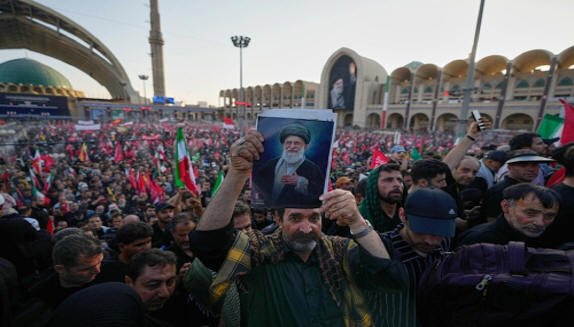 |
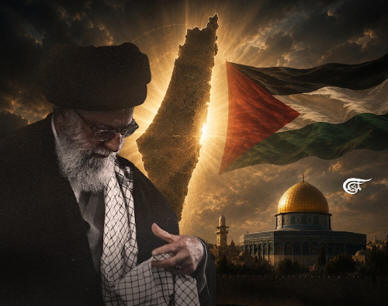
| In the thought of the martyred Iranian Supreme Leader, Sayyed Ali Khamenei, Palestine was the compass of the Islamic Ummah and the heart of resistance, July 6, 2026. | Millions of Iranians concluded a two-day public farewell ceremony for their martyred Supreme leader, Sayyed Ali Khamenei in Tehran, July 6, 2026. |
 |
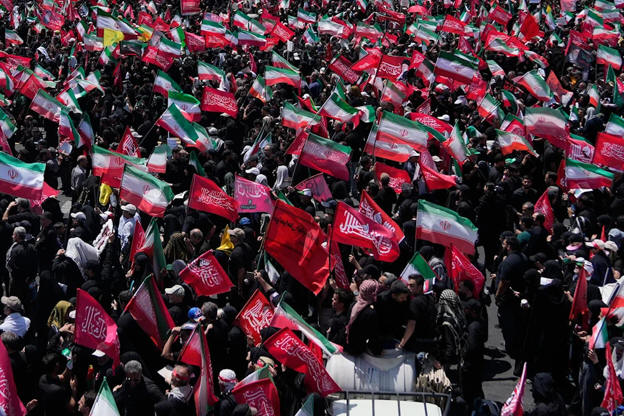 |
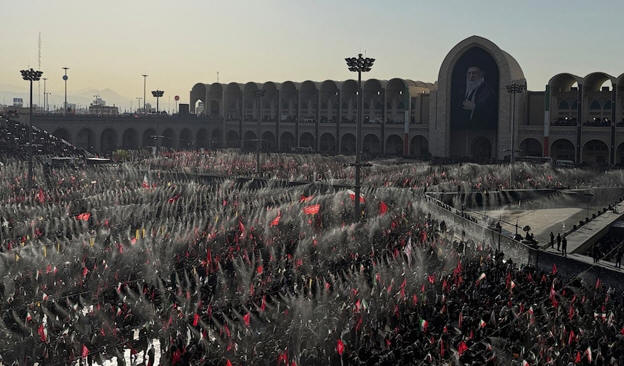
| Millions of Iranian mourners gathered at Tehran's Grand Mosalla on Sunday for the funeral prayer over their martyred Supreme Leader, Sayyed Ali Khamenei, July 6, 2026. | The funeral procession for the martyred Iranian Supreme leader, Sayyed Ali Khamenei, concludes in Tehran later today, July 6, 2026. |
Millions of Iranians concluded a two-day public farewell ceremony for their martyred Supreme leader, Sayyed Ali Khamenei, in Tehran, July 6, 2026 |
|
***
Palestine in the thought of the martyred Iranian Supreme Leader, Sayyed Ali Khamenei's: The heart of Resistance
ByJanna Kadri
Al-Mayadeen, July 6, 2026
Palestine was not merely a cause in the thought of the martyred Iranian Supreme Leader, Sayyed Ali Khamenei, but the compass of the Islamic Ummah and the beating heart of the region’s Resistance against the Zionist entity and its backers.
As Iran marks the fourth day of funeral ceremonies for the martyred Leader of the Islamic Revolution, Sayyed Ali Khamenei, with massive crowds taking part in the main farewell procession in Tehran, one cause stands out at the heart of his political and ideological legacy: Palestine.
Across decades of speeches, written positions, and direct messages to Palestinian Resistance leaders, Sayyed Khamenei presented Palestine not as a passing political file, a border dispute, or a cause limited to Palestinians alone, but as a central question of the Islamic Ummah, a human and moral issue, and the axis around which the wider movement of Resistance in West Asia revolved.
In his discourse, Palestine was not merely occupied land. It was the heart of the confrontation between the Islamic Ummah and the Front of Arrogance; a wound in the body of the Muslim world and in the conscience of humanity, whose liberation was tied to the restoration of dignity, independence, and authority for the region’s peoples.
This position was clearly reflected in his April 2018 response to a letter from the martyred Hamas leader Ismail Haniyeh, in which Sayyed Khamenei reaffirmed Palestine as an “important issue of the Islamic Ummah” and insisted that Resistance was not one option among many, but the only path capable of restoring Palestinian rights.
“No doubt, resistance is the only way to free an oppressed Palestine, and it is the only cure for wounds on the body of that brave and proud nation,” Sayyed Khamenei wrote.
Palestine as an Islamic, human, and moral issue
Sayyed Khamenei repeatedly described Palestine as the most important international issue facing the Islamic world. In one of his clearest formulations, he said:
“Undoubtedly, in Muslim life and across the world of Islam, nothing is as important and serious as the issue of Palestine.”
In his speeches, the occupation of Palestine is not presented as an isolated tragedy, but as part of a broader project aimed at weakening Muslim unity and imposing Western and Zionist domination on the region. He argued that the occupation created a hostile base at the heart of the Islamic world, separating its eastern and western parts and turning Palestinian land into a platform for pressure against surrounding Arab and Muslim nations.
Within this framework, Sayyed Khamenei situated the Zionist entity as the forward front of Western hegemony in West Asia, a project planted in the region to fracture Muslim unity, protect colonial interests, and extend the reach of global arrogance. This is also why he repeatedly treated the entity as historically unsustainable: not a natural state rooted in the will of the region’s peoples, but an artificial structure imposed by force, sustained by Western backing, and weakened by its own lack of legitimacy.
From this view, Palestine’s significance is religious, humanitarian, political, security-related, and economic. Religiously, Sayyed Khamenei frames the defense of Palestine as a duty because occupied Palestine is part of Muslim land. Humanitarianly, he presents Palestinians as a people denied their homeland, rights, and dignity. Politically and strategically, he sees the Zionist entity as a Western-backed project designed to dominate the region and prevent its peoples from achieving real independence.
One can clearly see here how Palestine became inseparable from the revolutionary identity of the Islamic Republic itself. Imam Khomeini’s designation of International Quds Day turned Palestine into a permanent revolutionary commitment, not a seasonal slogan or a diplomatic position. For Sayyed Khamenei, Quds Day embodied the Islamic Revolution’s wider doctrine of standing with the mustazafin, the oppressed and dispossessed, against the mustakbirin, the arrogant powers that seek domination over nations. Palestine, in this sense, was not only an Islamic cause but a test of humanity’s moral position toward occupation, dispossession, and resistance.
Al-Quds also occupies a central place in this vision. Sayyed Khamenei described al-Quds as “the capital city of Palestine,” stressing that the city belongs to the Palestinian people and the Islamic Ummah, and that defending it is inseparable from the wider struggle against occupation.
This is why Sayyed Khamenei consistently rejected efforts to reduce Palestine to negotiations, diplomatic formulas, or limited territorial arrangements. For him, the issue is not only about the 1967 borders but about the usurpation of Palestine itself and the denial of the Palestinian people’s right to determine their own future. As he put it:
“There is no difference between territories occupied before or after the year 1967. Every inch of Palestinian lands is part of Muslims’ homeland.”
Resistance as doctrine, not reaction
One of the clearest constants in Sayyed Khamenei’s speeches is his insistence that Resistance is the basis of any real solution. He repeatedly argued that negotiations with the Zionist entity only delay Palestinian victory and allow the occupation to strengthen itself.
In his 2018 letter to martyr Haniyeh, Sayyed Khamenei warned that “moving towards negotiations with the cunning, usurper, and untruthful regime is an irreversible mistake,” adding that such a path would “delay the victory of the Palestinian nation” and bring “nothing other than detriment” to the oppressed Palestinian people.
This language reflected a wider doctrine: Palestine could only be liberated by the steadfastness of Palestinians themselves, supported by Muslim nations and Resistance movements across the region. Elsewhere, Sayyed Khamenei put the matter more directly, saying:
“It is not possible to save Palestine through begging the United Nations and the domineering powers, or the Zionist regime for that matter. The only way to save Palestine is to resist.”
Sayyed Khamenei also emphasized that the Palestinian uprising was not manufactured from outside. In his view, the Intifada was born from Palestinian suffering, anger, faith, and determination.
“The Palestinian uprising was not caused by the Islamic Republic or the people of Lebanon...It was sparked by the people of Palestine.”
Iran’s role, as he framed it, was not to replace the Palestinian people by fighting in their stead, but to support their Resistance and prevent the cause from being buried under pressure, normalization, or compromise.
Arab betrayal and the politics of abandonment
Sayyed Khamenei’s response to martyr Haniyeh also directly addressed what the Hamas leader described as the betrayal of Palestine by some Arab states. Sayyed Khamenei confirmed that assessment, saying martyr Haniyeh had correctly pointed to “the conspiracy and hypocrisy of some Arab countries” and their “vicious plots” carried out behind the United States.
For Sayyed Khamenei, support for Palestine was not a temporary political position, nor something that could shift with regional alignments. “This [support of Palestine] is a religious duty and a humane responsibility that goes beyond political events and changes,” he wrote, adding that “all Muslim governments, Muslim nations, and Islamic movements” were obligated to carry out this task.
He linked Arab betrayal and negotiations with the occupation to the same objective: delaying Palestinian victory and weakening the Resistance. “The matter of Palestine is at the heart of all international challenges that the Islamic Ummah faces while fighting against the Front of Arrogance,” Sayyed Khamenei said, warning that negotiations with the Zionist entity would only harm the Palestinian people.
“[This] act of Betrayal by some Arab leaders, which is gradually revealing itself, pursues the same goal.”
For Sayyed Khamenei, normalization and Arab silence were not neutral positions. They formed part of a political chain that enabled the Zionist entity to continue its occupation, expand its crimes, and attempt to erase Palestine from regional and global consciousness.
In his wider speeches on Palestine, he argued that the silence of many Arab governments, and in some cases their open treachery, allowed the occupation to grow more aggressive and emboldened the Zionist project to speak openly once again about expansion.
This is why Sayyed Khamenei placed special emphasis on Muslim and Arab peoples, especially the youth. Even when governments retreated, he argued, nations remained capable of carrying the Palestinian cause forward. As he put it in the same letter:
“The only cure is strengthening the resistance within the Muslim World, reinforcing the fight against the usurper Zionist regime and its allies.”
The Axis of Resistance around Palestine
Sayyed Khamenei’s Palestine-centered worldview is also the ideological foundation of his approach to the Axis of Resistance. He did not treat the Resistance fronts in Palestine, Lebanon, Iraq, Yemen, Syria, and Iran as disconnected arenas, but as parts of one broader confrontation with occupation, domination, and the US-backed Zionist project.
In this framework, Palestine is the compass. It is the cause that gives the Resistance axis its moral legitimacy and strategic direction. As Sayyed Khamenei put it, “Today the issue of Palestine is the pivot of this movement.”
Sayyed Khamenei has repeatedly pointed to the Lebanese Resistance as proof that steadfastness can force the Zionist entity to retreat without concessions. In his speeches, the liberation of southern Lebanon became a model for Palestinians and for the wider Islamic Ummah: a demonstration that armed Resistance, patience, and faith could achieve what negotiations and summits had failed to deliver.
“As a successful paradigm for the Islamic Ummah, resistance could for the first time liberate the occupied lands without making any concessions to Israel,” he said, presenting Lebanon’s experience as evidence that the Zionist entity could be forced into retreat through Resistance rather than compromise.
At the same time, Sayyed Khamenei sought to underline that Palestinian Resistance was not an imported project or the product of outside direction. Rather, he presented it as an organic uprising born from the Palestinian people’s own suffering, accumulated grievances, and determination to reclaim their rights. In this reading, Iran and Lebanon stood as supporters of an already existing Palestinian will to resist, not as the source of that will.
He also described Palestine as the pivot of Islamic Awakening, saying “the al-Aqsa Intifada managed to go beyond the borders of Palestine and engage all Muslim and Arab nations.” In this view, Palestine is not only a cause supported by the Resistance; it is the cause that helped shape the Resistance and gave the region’s movements a shared direction.
Against erasure and normalization
Another central theme in Sayyed Khamenei’s speeches is the struggle against forgetting Palestine. He warned that the Zionist entity and its supporters sought to erase the name of Palestine from history, political discourse, and public consciousness.
“Today the leaders of the usurping Zionist regime and their American supporters… are trying to erase the name of Palestine from history and from the minds of the world's people.”
For this reason, he insisted that Palestine remain present in speeches, media, art, public mobilization, and political action. He argued that the global media system worked for decades to portray the occupier as the victim while concealing the suffering of Palestinians. In that context, he also called for cultural and artistic work to expose the reality of occupation.
“This must be expressed in an appropriate way. Films must be made in this regard, and artistic works have to be produced in order to tell the world what is happening in Palestine.”
This concern became even more urgent during the genocide in Gaza, as Sayyed Khamenei warned that attention must not be diverted from Palestine. In his view, distraction is itself a weapon used by the enemies of Palestine, especially when the scale of Israeli crimes produces global outrage.
A proposed political solution rooted in return
Although Sayyed Khamenei rejected negotiations with the Zionist entity as a path to liberation, he repeatedly presented a democratic political solution, consistent with international law and the right to self-determination: a referendum among the original people of Palestine, including Muslims, Christians, and Jews, whether they live inside Palestine or in exile.
“The logical solution is to hold a referendum among the people of Palestine, including all those who have been displaced from Palestine and who, of course, are willing to return to their homeland.”
Under this proposal, displaced Palestinians would return to their homeland, take part in determining the political system, and decide the future of the land. Sayyed Khamenei said the referendum should include “all those who used to live in Palestine before the year 1948,” including Muslims, Christians, and Jews.
He framed the proposal as a question of basic political rights, asking: “Why is democracy good for all people of the world, but not for the people of Palestine? Why is it that all people of the world have the right to determine their destiny, but not the people of Palestine?”
At the same time, he maintained that such a solution could not be achieved through reliance on the United States, Western governments, or international bodies that have shielded the occupation for decades. It required Resistance, pressure, unity, and the refusal to abandon Palestinian rights.
Palestine as destiny
In Sayyed Khamenei’s thought, Palestine was not only a symbol of oppression. It was also a symbol of certainty: the belief that occupation cannot last forever, that peoples who resist cannot be erased, and that the future belongs to those who remain steadfast.
His speeches repeatedly returned to one idea: Palestine will remain, while the Zionist entity is temporary.
“They will not be able to annihilate the name of Palestine,” he said, stressing that “Palestine and the Palestinian nation will stay.”
This conviction was tied to his belief that the occupation was facing not only a political struggle, but a historical reality it could not escape.
“Palestine belongs to the Palestinian nation,” Sayyed Khamenei said. “Sooner or later, the usurpers will inevitably surrender to this reality.”
That is why Palestine occupied such a central place in his worldview. It defined the confrontation with the United States and the Zionist entity. It exposed Arab normalization and betrayal. It united the Resistance fronts. It gave the Islamic Ummah a shared political and moral compass.
For Sayyed Khamenei, Palestine was not a memory to be preserved, nor a slogan to be repeated. It was the heart of the region’s struggle for liberation and the cause around which the Resistance continued to organize itself until victory.
***
Sayyed Ali Khamenei farewell ceremony concludes in Tehran
Al-Mayadeen, July 6, 2026
The public farewell ceremony for the martyred international leader Sayyed Ali Khamenei concluded on Sunday evening in Tehran after nearly two days of continuous public attendance at Imam Khomeini Mosalla, ahead of the official funeral procession scheduled for Monday.
An Al Mayadeen correspondent in Tehran, the final moments of the ceremony saw the curtain drawn for the last time over the coffin of Sayyed Khamenei, illuminated in red as a symbol of mourning while the anthem "Be Aman Allah Ya Shahid Allah" ("Go in God's protection, O Martyr of God") was played.
The farewell ceremonies began on Saturday morning and drew large crowds from across Iran, including families of martyrs, resistance fighters, civilian and military officials, and foreign delegations. Organizers extended the event to accommodate the continuous arrival of mourners.
Throughout the two-day ceremony, Imam Khomeini Mosalla served as the focal point for public mourning, with visitors reciting the Holy Quran, performing prayers, and offering elegies while renewing their commitment to the principles of the Islamic Revolution and its martyrs.
Funeral procession to continue across Iran and Iraq
The farewell ceremony concluded after the last groups of mourners paid their respects, after which Sayyed Khamenei's body was transferred from Imam Khomeini Mosalla to continue the remaining stages of the funeral rites.
The official funeral procession is scheduled to take place on Monday morning in Tehran with broad public participation alongside senior Iranian officials and international guests.
The funeral ceremonies are set to continue over six consecutive days across several Iranian cities as well as stops in Iraq. Organizers estimate that between 15 and 20 million mourners could participate, potentially making it the largest state funeral in Iran's history.
According to the official schedule, following the Tehran procession, the body will be transferred to Qom before traveling to the holy Iraqi cities of Najaf and Karbala. It will then return to Iran for burial on July 9 at the shrine of Imam Reza in Mashhad.
Iranian commanders vow revenge
On the last day of the ceremony, Iranian military commanders issued a series of statements pledging continued loyalty to the late Leader Sayyed Ali Khamenei, vowing retaliation against his killers, and reaffirming commitment to his ideological and strategic path.
Iranian Army Commander Major General Amir Hatami said in a public address that the late Sayyed Khamenei “drew a path of dignity and independence, and prepared for us all the means to follow it,” adding that the armed forces “will continue the path behind our commander Sayyed Mojtaba Khamenei with unwavering strength and determination.”
Hatami further pledged that the Iranian public “will not allow the enemies to escape punishment” and that “they will be held accountable for their crimes.”
Separately, Deputy Commander of the Armed Forces Admiral Habibollah Sayyari said the commander “will remain alive in our minds forever” and that Iranian forces “will follow his recommendations.”
Sayyari added that Iran had “made a pledge to remain with our martyred leader and we renew that pledge today,” stressing that “the idea of vengeance is always present in our minds.”
Millions attend mass funeral in Tehran
The statements by Iranian military commanders come amid ongoing mass funeral ceremonies in Tehran, where millions of mourners have gathered to bid farewell to the late Leader Sayyed Ali Khamenei in one of the largest public gatherings in the country’s modern history.
The funeral ceremonies represent a major demonstration of national unity and strength, as millions of mourners gathered across Tehran for one of the largest public commemorations in the country’s modern history.
Iranian government spokesperson Fatemeh Mohajerani said the scale of participation in the funeral ceremonies reflects the country’s internal cohesion and resilience, noting the large influx of participants from outside the capital.
Speaking to the Iranian state news agency IRNA while attending the funeral, she said: “It is clear, given the level of public interest in attending, that the most significant aspect is the large number of people present, because this is one of the manifestations of our national strength.”
She added that the “enthusiastic turnout” showed that “our dignity and our system continue to endure,” pointing to widespread public participation in both the funeral prayer and farewell ceremonies.
Mohajerani said a special committee had been formed to oversee the funeral arrangements, holding regular meetings to coordinate logistics. She added that responsibilities were distributed at the national level, with routes designated and provincial governors involved in the preparations.
***
Sayyed Khamenei to be transferred to Qom, Najaf after Tehran cortege
Al-Mayadeen, July 6, 2026
The funeral procession for Iran's late Leader, Sayyed Ali Khamenei, will conclude in the capital at 5:00 pm local time, with the body then transferred to the holy city of Qom before the Maghrib call to prayer, a senior IRGC commander announced Monday.
Brigadier General Hassan Hassanzadeh, Commander of the IRGC in Greater Tehran, confirmed the timeline for the capital's proceedings, stating that the public had turned out in massive numbers, inscribing a "historic epic". The transfer to Qom is scheduled to take place ahead of evening prayers, marking the next stage of the mourning rites.
Furthermore, the Iranian Ministry of Transport announced that it has dedicated 400 travel buses and 6 trains to transport mourners participating in the funeral processions of Martyr Sayyed Khamenei.
'O avengers of Khamenei's blood' echoes through the crowd
In parallel, Al Mayadeen's correspondent in Tehran reported that Iranians are flooding the procession under the banner "O Avenge Khamenei's Blood," with crowds described as the largest in modern world history.
Funeral procession in Iraq
Officials confirmed that separate funeral ceremonies in Iraq will commence at 6:00 am on Wednesday in Najaf, with top Iranian leadership expected to attend.
According to Mehr News Agency, President Masoud Pezeshkian, Parliament Speaker Mohammad Bagher Ghalibaf, and the eldest son of the late leader will participate in the Iraqi rites.
Al Mayadeen Plus correspondents added that preparations in Najaf, Iraq, have been completed and that the ceremonies there will begin Wednesday morning.
International outlets including The Guardian and the Financial Times have cited figures in the millions for the Tehran turnout, while Al Mayadeen asserted that the event has become the largest funeral globally in modern history.
Millions flood Tehran's streets for Sayyed Khamenei's funeral
Massive crowds converged on the Iranian capital early on June 6 to participate in the funeral procession for the martyred Leader, Sayyed Ali Khamenei, and members of his family, with state television reporting that turnout has overwhelmed main squares, forcing organizers to alter the procession route.
Al Mayadeen's correspondent in Tehran reported that Iranian officials estimate the funeral procession could last approximately 12 hours. The vehicle carrying the coffins of the martyrs, including the youngest granddaughter of the late Leader, made its way through mourners starting from Azadi Street. However, as Imam Hussein Square and other major hubs reached full capacity, the departure point was shifted from Imam Hussein Square to Enghelab Square, according to the correspondent.
The third day of public farewell ceremonies saw crowds continuing to flood the capital's thoroughfares, with mourners chanting under banners calling for vengeance. The proceedings followed a two-day vigil at Imam Khomeini Mosalla, which concluded on June 5 evening after nearly 48 hours of continuous attendance by millions.
Iranian government spokesperson Fatemeh Mohajerani addressed the scale of the mobilization, asserting that the millions-strong turnout reflects the unity between the state and the people. "This epic turnout will strengthen Iran's capabilities across various fields," she added.
Funeral ceremonies for the late leader are scheduled to continue for six consecutive days, spanning multiple regions across Iran as well as stops in Iraq. Officials estimate that between 15 and 20 million mourners will ultimately participate.
***
Millions of Iranians gather for funeral prayer over their martyred Supreme leader, Sayyed Khamenei, and his family
Al-Mayadeen, July 5, 2026
The funeral prayer marks the second day of Iran's six-day national mourning period, with one of the largest public commemorations in the country's modern history drawing millions of mourners from Iran and beyond.
Millions of Iranian mourners gathered at Tehran's Grand Mosalla on Sunday for the funeral prayer over their martyred Supreme Leader, Sayyed Ali Khamenei, in what is set to be one of the largest public gatherings in the history of the Islamic Republic, as the body of the martyred leader arrived at the prayer complex accompanied by members of his family ahead of the ceremony.
The funeral prayer marks the second day of Iran's six-day national mourning period, with one of the largest public commemorations in the country's modern history drawing millions of mourners from Iran and beyond.
Massive crowds remained inside Tehran's Grand Mosalla and in its surrounding areas after gathering there since Saturday to pay their final respects to the body of Sayyed Ali Khamenei.
The funeral prayer, led by Sheikh Jaafar Sobhani, was attended by Iranian President Masoud Pezeshkian, Parliament Speaker Mohammad Bagher Ghalibaf, Judiciary Chief Gholam-Hossein Mohseni-Ejei, as well as officials and personnel from across the Islamic Republic at all levels. The ceremony was also attended by the sons of the martyred leader.
The national anthem was played, and a military honors ceremony was held for the body of the martyred Sayyed Ali Khamenei minutes before the funeral prayers.
Mourners repeatedly chanted calls for vengeance over the killing of Sayyed Ali Khamenei, while carrying red flags and banners symbolizing the demand for retribution over the injustice that befell the nation.
Massive turnout
Participants traveled from across Iran and from more than 100 countries, according to Iranian estimates, joining official delegations, Resistance figures, and religious scholars in paying tribute to the Leader martyred in the joint US-Israeli aggression on Iran.
The streets of the capital were filled with mourners dressed in black, carrying Iranian flags, red banners, and portraits of Sayyed Khamenei, alongside images of his successor, Sayyed Mojtaba Khamenei. Slogans expressing loyalty to the Islamic Republic and calls for retaliation echoed throughout the procession.
Day two: Millions gather in Tehran to bid farewell to Sayyed Khamenei
Millions of Iranians began bidding a final farewell to the martyred leader on Saturday as funeral ceremonies officially commenced in Tehran, marking the beginning of six days of national mourning in one of the largest public commemorations in the country's history.
State television announced the start of the ceremonies as vast crowds converged on the capital in scenes of profound grief and remembrance. Iranian authorities estimate that between 15 and 20 million people will participate in Tehran alone over the coming three days, reflecting the enduring place Sayyed Khamenei holds in the hearts of many across the nation after more than three decades of leadership.
Sayyed Ali Khamenei led the Islamic Republic from 1989 until he was martyred at the age of 86 on the first day of the US-Israeli aggression on Iran on February 28.
Tehran filled with mourners honoring Sayyed Khamenei
Long before the official ceremonies began, thousands of mourners carrying red banners, a symbol of vengeance, gathered in the courtyard of Tehran's Grand Mosalla, awaiting the arrival of Sayyed Khamenei's coffin.
The atmosphere was marked by both sorrow and resolve as chants of "death to America" and "revenge, revenge" echoed across the vast religious complex.
AFP journalists reported that many mourners walked several kilometers to reach the venue, while hundreds had already assembled outside the Imam Khomeini Mosalla Grand Mosque on Friday evening, determined to be present for the final farewell.
"We want to say a final goodbye to our leader, which is why waiting like this isn't painful or difficult for us," Somayye Hamedi told AFP.
Authorities imposed extensive security measures throughout the capital, closing roads and preparing to restrict airspace ahead of what is expected to be Iran's largest public gathering since the funeral of Imam Ruhollah Khomeini in 1989.
Funeral procession to span Iran and holy sites in Iraq
Sayyed Ali Khamenei's coffin will lie in state until Monday before the funeral procession moves through Tehran. On Tuesday, it will travel to the holy city of Qom before continuing on Wednesday to the revered Shia holy cities in neighboring Iraq. The journey will conclude on Thursday with his burial in Mashhad, his home city in northeastern Iran.
Members of Sayyed Ali Khamenei's family who were martyred in the US-Israeli strikes, including his infant granddaughter, will also be laid to rest during the funeral ceremonies.
Iranian leaders and international delegations pay tribute
Senior Iranian officials gathered on Friday to pay their respects in an emotional display of unity following the war. Parliament Speaker Mohammad Bagher Ghalibaf was visibly moved during the ceremonies, while Ahmad Vahidi, recently appointed commander of the Islamic Revolution Guard Corps following the martyrdom of his predecessor in the same attacks, was also among those in attendance.
International dignitaries honoring Sayyed Khamenei included Pakistani Prime Minister Shehbaz Sharif, Georgia’s President Mikheil Kavelashvili, and former Russian President Dmitry Medvedev, who attended on behalf of Russian President Vladimir Putin.
Representatives of Hamas, Hezbollah, and Afghanistan's government also joined the commemorations alongside other foreign delegations. Iraqi President Nizar Amidi and Turkey’s Vice President Cevdet Yılmaz are also among the senior officials present, alongside delegations from Saudi Arabia, Oman, Qatar, and other regional and international states.
Additional delegations include representatives from Nicaragua, Myanmar, and international organizations such as the Economic Cooperation Organization (ECO), alongside senior officials, including ECO Secretary-General Asad Majeed Khan. The Qatari delegation and other diplomatic missions from Asia, Africa, and Latin America are also in attendance.
Calls for unity as the nation mourns
Although active fighting has paused following an initial understanding between Iran and the US, Iranian officials stressed that the country remains prepared should any aggression target its sovereignty or territory.
"The nation's call for vengeance must ring in the ears of the whole world," Ghalibaf said, urging Iranians to turn out in large numbers for the funeral ceremonies.
Army chief Amir Hatami vowed that "Israel" and the US "will pay for the blood of the martyred leader and all the nation's martyrs."
As millions continue to gather to pay their respects, authorities have also urged mourners to observe public safety measures, with state television broadcasting guidance intended to prevent crowd crushes during the historic farewell to Sayyed Ali Khamenei.
***
Tehran Mosalla receives Sayyed Khamenei's body ahead of first farewell
Al-Mayadeen, July 3, 2026
The body of the martyred Leader of the Islamic Revolution and the Republic of Iran, Sayyed Ali Khamenei, has been transferred to the Mosalla of Tehran ahead of the official funeral procession, which is scheduled to begin on Saturday, according to Al Mayadeen's correspondent in Tehran.
A farewell ceremony for the Ummah's leader was held yesterday near the Imam Khomeini Hussainiya, adjacent to the site where he was martyred.
An atmosphere of profound mourning prevailed throughout the ceremony, as reciters of Ahl al-Bayt elegies chanted lamentations commemorating Imam Hussein. A special memorial ceremony was also held in honor of the martyred Leader.
Funeral schedule for late Leader Sayyed Khamenei announced
The head of the committee overseeing the funeral of Iran’s late Leader unveiled the full official schedule on June 22, outlining a multi-day series of farewell, funeral, and burial ceremonies set to commence on Saturday, July 4 – corresponding to 19 Muharram on the Islamic calendar.
In a formal statement, funeral committee head Iman Attarzadeh announced that the events will be held under the slogan "We must rise" and will feature the symbol of a raised fist. The initial farewell ceremonies will span two days at the Grand Imam Khomeini Mosque in the Iranian capital, Tehran.
Prayers over the martyred Leader’s body are scheduled to take place in three major Iranian cities: Tehran, Qom, and Mashhad. Attarzadeh specified that Tuesday, July 7, has been designated for the funeral procession and prayers in the holy city of Qom, with further logistical details to be released in subsequent announcements.
In a notable cross-border element, the committee head confirmed that the body will also be transported to Iraq for processions through the holy cities of Najaf al-Ashraf and Karbala on Wednesday, July 8.
The final burial will take place in the holy city of Mashhad on Thursday, July 9, corresponding to 24 Muharram, where the late leader will be laid to rest at the shrine of Imam Ali ibn Musa al-Rida, one of Shia Islam’s most revered sites.
International delegations head to Tehran for tributes
A wave of international delegations is set to arrive in Tehran this week as world leaders and senior officials prepare to attend the funeral of Iran’s martyred Leader, Sayyed Ali Khamenei, whose assassination has prompted an outpouring of diplomatic engagement across the globe.
Pakistan’s Prime Minister Shehbaz Sharif will be among the high-profile attendees, according to a statement from Pakistan’s foreign ministry on Thursday. Ministry spokesman Tahir Andrabi confirmed that Prime Minister Sharif will undertake a multi-nation visit from July 3 to July 5, beginning with a stop in Tehran for the funeral before proceeding to Turkey.
China has also confirmed its representation at the solemn ceremony. The Chinese Foreign Ministry announced that a senior member of the National People’s Congress Standing Committee (NPCSC) will travel to Tehran tomorrow to pay respects on behalf of the Chinese government.
India’s delegation will be led by its Deputy Foreign Minister, accompanied by the Governor of the state of Bihar, according to an announcement from India’s external affairs ministry.
Russia, meanwhile, will send a top-level envoy. Dmitry Medvedev, deputy chairman of Russia’s Security Council, will attend the funeral as a special representative of Russian President Vladimir Putin. The news was confirmed by Iran’s ambassador to Moscow, according to ISNA.
***
Fair Use Notice
This site contains copyrighted material the
use of which has not always been specifically authorized by the copyright
owner. We are making such material available in our efforts to advance
understanding of environmental, political, human rights, economic,
democracy, scientific, and social justice issues, etc. We believe this
constitutes a 'fair use' of any such copyrighted material as provided for
in section 107 of the US Copyright Law. In accordance with Title 17 U.S.C.
Section 107, the material on this site is
distributed without profit to those
who have expressed a prior interest in receiving the included information
for research and educational purposes. For more information go to: http://www.law.cornell.edu/uscode/17/107.shtml.
If you wish to use copyrighted material from this site for purposes of
your own that go beyond 'fair use', you must obtain permission from the
copyright owner./font>
|
||||||||||||||||