www.aljazeerah.info
2026 News
Archives
Mission & Name
Conflict Terminology
Editorials
Gaza Holocaust
Gulf War
Isdood
Islam
News
News Photos
Opinion Editorials
US Foreign Policy (Dr. El-Najjar's Articles)
www.aljazeerah.info
|
Editorial Note: The following news reports are summaries from original sources. They may also include corrections of Arabic names and political terminology. Comments are in parentheses. |
***
During the two-year Israeli Genocidal War on the Palestinian people in the Gaza Strip (October 7, 2023-October 13, 2025), world governments were either active participant and accomplices of the genocide, or watched passively, without taking any actions to Stop it.
***
17 Palestinians Killed, 16 Injured, Which Brought the Death Toll of the Israeli Genocidal War on the Gaza Strip to 73,091 and the Injuries to 173,553
by July 5, 2026
***
Note about the number of Palestinians, who were kidnapped by the Israeli occupation forces in the Wet Bank:
The Commission of Detainees and Ex-Detainees Affairs, the Palestinian Prisoner's Society (PPS), and Al-Dhameer Association for Human Rights stated in a report issued Sunday that the total number of kidnappings of Palestinians in the West Bank, since the start of the ongoing genocide in Gaza, has risen to more than 18,500, including over 570 women and about 1,500 children.
Source: Palestine Information Center, August 10, 2025.
***
Note About the Missing Palestinians in the Gaza Strip:
On February 26, 2025, the Palestinian Center for Political and Development Studies announced that the number of the missing in the Gaza Strip has exceeded 14,000 people, including 2,000-3,000 held in Israeli occupation prisons, without releasing any information on their fate.
***
***
 |
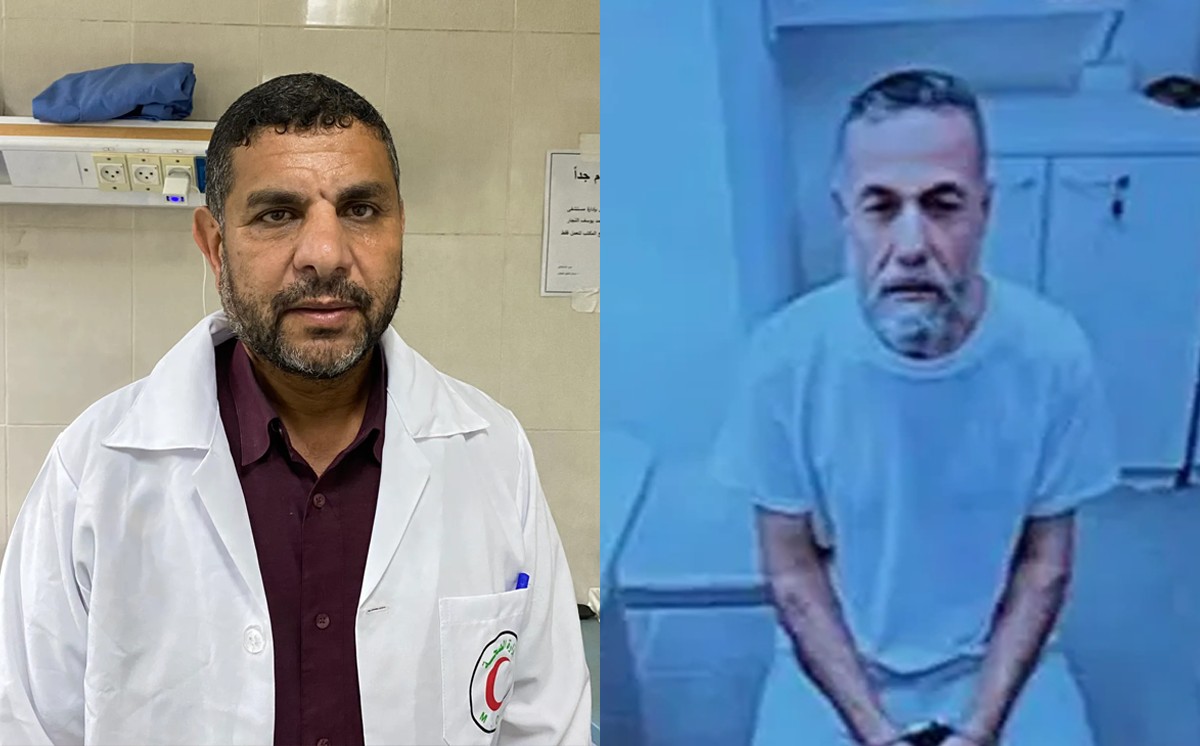 |
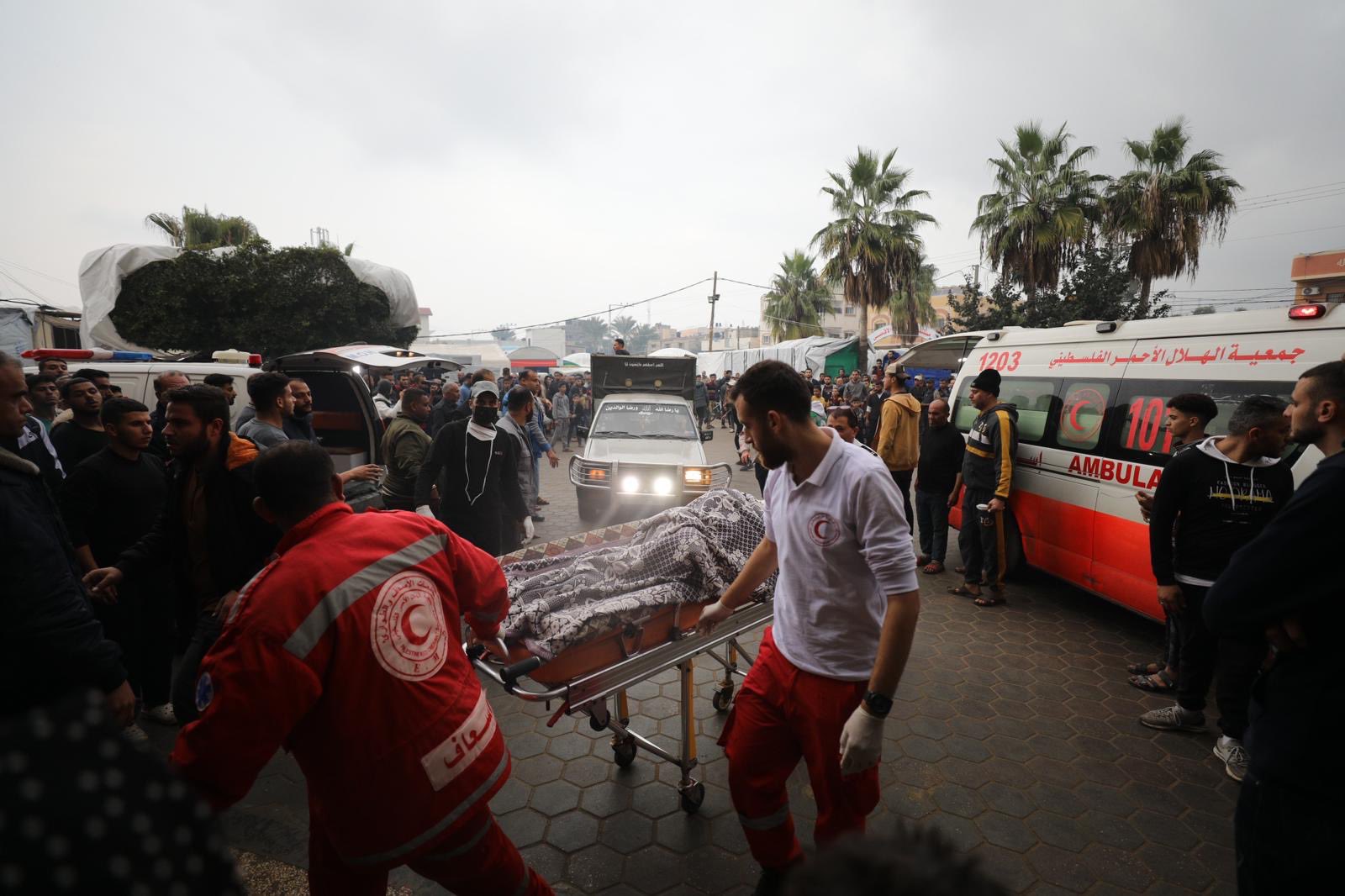
| A Palestinian citizen was martyred last night and others were reported injured today, Sunday, following Israeli attacks in the Gaza Strip, July 5, 2026. | Lives of detained Palestinian doctors, 'Husam Abu Safiya and Marwan El-Hams, are in grave danger due to their exposure to daily torture in Israeli prisons, July 5, 2026. |
 |
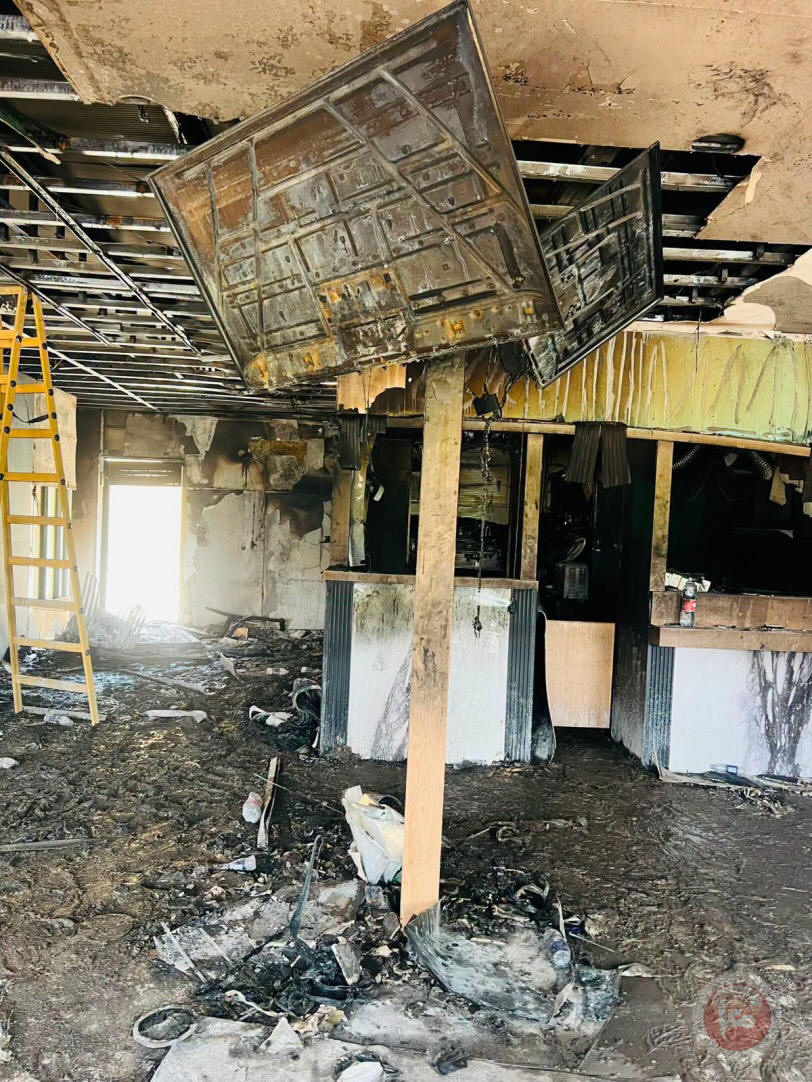 |
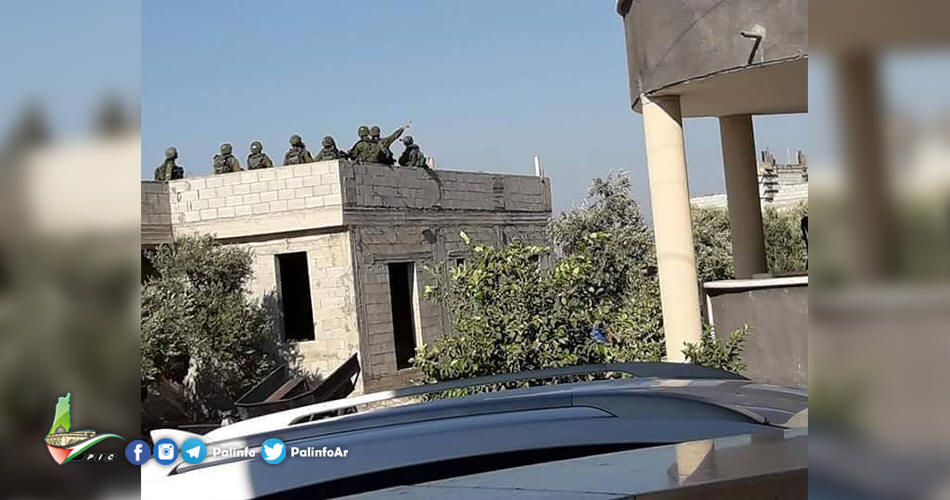
| Israeli occupation soldiers seized a Palestinian house in the village of 'Arabbouna, converting it into a military post, after forcing its residents to evacuate, on July 4, 2026. | Illegal Israeli settlers set fire to commercial facilities, attempted to burn a house and a garage, and vandalized vehicles and private property in Wadi El-Sha'ir, July 5, 2026. |
 |
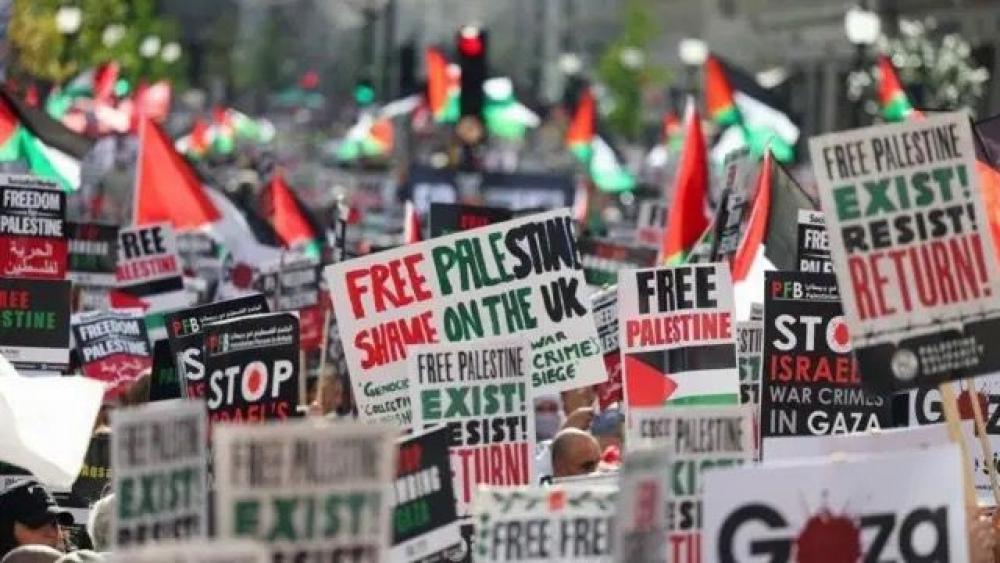 |
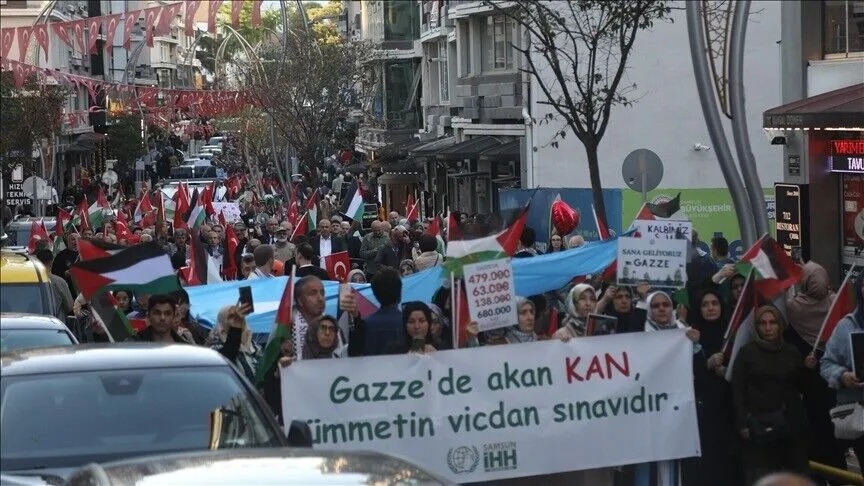
| Preparations are underway to launch the Flotilla from France on July 26, in a land journey aiming to reach Palestine, as announced in Turkiye, July 5, 2026. | Global solidarity with Palestine is now a deeper transformation in the structure of popular, political, and cultural positions around the world, July 5, 2026. |
|
17 Palestinians Killed, 16 Injured, Which Brought the Death Toll of the Israeli Genocidal War on the Gaza Strip to 73,091 and the Injuries to 173,553, by July 5, 2026 |
|
***
***
***
Gaza: Death toll climbs to 73,090 martyrs
Saturday 4-July-2026
GAZA, (PIC)
The death toll from the Israeli genocidal war on the Gaza Strip, which started on October 7, 2023, has surged to 73,090 martyrs, according to the Palestinian Health Ministry on Saturday morning.
The ministry added that the total number of the wounded also surged to 173,553 people.
In its daily report, the Health Ministry said that hospitals received 16 civilian bodies and 16 wounded people over the past 48 hours.
Since the ceasefire agreement took effect on October 10, 2025, at least 1,066 Palestinians have been killed, and 3,445 others have been injured.
***
Palestinian killed, others injured in Israeli attacks in Gaza
Sunday 5-July-2026
GAZA, (PIC)
A Palestinian citizen was martyred last night and others were reported injured today, Sunday, following Israeli attacks in the Gaza Strip.
According to media sources, an Israeli strike last night killed a civilian in the west of Jabalya refugee camp in northern Gaza.
A number of people also suffered injuries today in an Israeli strike on Gaza City’s El-Zaytoun neighborhood.
Meanwhile, Israeli occupation forces detonated buildings in the north of Rafa'h in southern Gaza, amid artillery shelling that targeted the northwestern areas.
Israeli occupation forces artillery fire also struck the eastern outskirts of El-Qarara town, east of Khan Younus.
***
Palestinian medical doctors, Abu Safiya and El-Hams, face life-threatening danger in Israeli occupation regime jails
Sunday 5-July-2026
WEST BANK, (PIC)
Palestinian human rights institutions have warned that the lives of detained Palestinian medical doctors, 'Husam Abu Safiya and Marwan El-Hams, are in grave danger due to their exposure to daily torture in the Israeli occupation regime prisons.
The Palestinian Commission of Detainees’ and Ex-Detainees’ Affairs said that Dr. 'Husam Abu Safiya and Dr. Marwan El-Hams are exposed to torture, abuse, and harsh detention conditions that threaten his life, affirming that the Israeli prison service seeks to liquidate him.
In a statement on Sunday, head of the Commission Ra-id Abul-Hems reported that Dr. Abu Safiya’s face and body bear evident signs of severe beatings and torture, adding that he is being starved, denied medical treatment and medication, and held in solitary confinement.
“The doctor’s health has sharply deteriorated, with his physical appearance visibly changed. He suffers from severe exhaustion, struggles to breathe and speak, and remains handcuffed and shackled most of the time,” Abul-Hems said.
Abul-Hems called on Physicians for Human Rights, the World Health Organization, and international medical bodies to launch urgent efforts to pressure Israel to release Abu Safiya and end all Israeli violations against him.
For its part, the Euro-Med Human Rights Monitor has urged, in a press release issued on Sunday, the Red Cross to “urgently coordinate with Israeli authorities to secure immediate access to two Palestinian doctors, 'Husam Abu Safiya, director of Kamal 'Udwan Hospital in North Gaza, and Marwan al-Hams, director of field hospitals in the Gaza Strip.”
“Given the growing fears that they could face death from torture in Israeli prisons and interrogation centers, the Red Cross must intervene immediately and conduct visits, especially considering credible reports of their health seriously declining due to severe torture, which includes repeated beatings and the withholding of medical treatment.”
“The immediate release of Abu Safiya and al-Hams, who are civilian doctors with protected status under international humanitarian law, is a top legal obligation that must be fulfilled and cannot be overlooked. Allowing the Red Cross to visit them right away is not a replacement for their release, but a necessary step to prevent their death in custody from torture.” Euro-Med stressed.
The Asra Media Office also warned of growing Israeli attempts to kill Dr. Abu Safiya, in light of recent reports published by prisoner institutions.
“These reports confirm that he is subjected to harsh incarceration conditions, including systematic torture, starvation, isolation, and denial of medical treatment,” Asra Media said.
“The ongoing detention of Dr. Abu Safiya without charge or trial under the ‘Unlawful Combatant Law’ constitutes a blatant violation of international law. It underscores the use of the detention system as a retaliatory tool against medical professionals who fulfilled their humanitarian duties in Gaza, as part of a systematic policy targeting detainees both physically and psychologically,” Asra Media added.
On Saturday, lawyer Nasir 'Odeh, the legal representative of Dr. 'Husam Abu Safiya, reported a serious deterioration in his health after being transferred to the underground interrogation section “Rakevet” in the Israeli Nitzan prison in the city of Ramla.
The lawyer demanded Abu Safiya’s immediate transfer out of this interrogation section and called for an urgent visit by a judge to assess his health condition closely before it is too late.
Lawyer 'Odeh said that during a recent visit, Dr. Abu Safiya was brought out handcuffed, shackled, and surrounded by several masked guards, adding that fresh severe injuries were visible across his body, including his head, neck, and the areas around his eyes and ears, leaving him barely recognizable.
During the meeting, it was clear that Dr. Abu Safiya struggled to breathe or speak in full sentences. He appeared profoundly weak, unable to sit upright without assistance and often seemed on the verge of losing consciousness, according to the lawyer.
***
PCHR: Due to the Israeli occupation and siege of the Gaza Strip, lives of 650 Gaza kidney patients at risk
Sunday 5-July-2026
GAZA, (PIC)
The Palestinian Center for Human Rights (PCHR) has warned of an imminent threat to the lives of nearly 650 kidney failure patients in the Israeli-besieged Gaza Strip due to the depletion of sodium bicarbonate, a key component in dialysis solutions.
In a press release published on its website on Saturday, PCHR said “hospitals have been forced, as a result of this acute shortage, to reduce the duration and number of dialysis sessions, a measure that will expose patients to serious health complications that could lead to death.”
“Depriving kidney failure patients of the sodium bicarbonate required for their treatment is not merely a temporary supply shortage; rather, it constitutes another component of the policy of comprehensive medical strangulation, which relies on destroying healthcare facilities, killing doctors, targeting paramedics, and preventing the entry of medicines in order to achieve the same result: the physical destruction of civilians and patients in the Gaza Strip,” PCHR underscored.
“The current crisis threatening kidney failure patients cannot be viewed in isolation from the systematic destruction inflicted upon Gaza’s healthcare system since October 7, 2023,” PCHR said.
“Israel’s military offensive has rendered most hospitals and medical facilities inoperative through direct attacks, sieges, and a continuous blockade on medical equipment, spare parts, and fuel. Consequently, more than 1,800 healthcare facilities have been wholly or partially damaged,” the rights group explained.
“Urgent international intervention is no longer merely a moral imperative; it is an immediate legal and humanitarian obligation to protect the fundamental rights to life and health,” it emphasized.
***
***
Killing, Injuring, and Abduction of Palestinians in the West Bank by Israeli Occupation Regime Forces
***
***
IOFs raid homes, kidnap Palestinians in the West Bank
Sunday 5-July-2026
WEST BANK, (PIC)
The Israeli occupation forces (IOFs) stormed last night and at dawn Sunday different areas of the West Bank, breaking into homes and kidnaping Palestinian citizens.
According to local sources, Israeli occupation forces confiscated a tractor and kidnapped its driver as he was removing garbage near the town of Baita in southern Nablus.
The IOF also kidnaped four citizens from their homes in the village of Burqa, northwest of Nablus.
Other raids on homes took place in the old refugee camp of 'Askar as well as some towns and villages near Nablus, with no reported kidnappings.
In Jineen, Israeli occupation forces raided several homes and kidnaped a young man in the city.
In El‑Khaleel, IOFs raided the homes of the Jaradat family in Sa’ir town and assaulted residents, sparking panic among the children. Skirmishes broke out between local youths and Israeli soldiers in the town.
The IOF also carried out raids on homes in other areas of the West Bank, without kidnappings.
In separate incidents, a horde of extremist Jewish settlers attacked a Palestinian house and rampaged through the Za'tout area of northern Yatta in al-Khalil province.
Another group of settlers stormed the village of Turmus 'Ayya near Ramallah and set fire to swaths of land.
In Nablus, settlers hurled stones at Palestinian cars traveling on a road near the illegal Israeli settlement of Homesh in Nablus.
Settlers also rampaged through El-Lubban El-Sharqiya village in southern Nablus during an IOF raid.
They reportedly set a diner aflame and attacked a house and a car in the village of Baita town in Nablus. After severely damaging the vehicle, the settlers assaulted its passengers.
***
***
Aggression and Attacks by Illegal Israeli Settlers and Soldiers
***
Note: Despite the Trump administration support for the Israeli occupation apartheid regime, the U.S. official policy is still considering the Israeli settlement activities in the Palestinian territories as illegal.
***
Dozens of the illegal Israeli settlers defile El-Aqsa Mosque, in El-Quds (occupied Jerusalem)
Sunday 5-July-2026
El-Quds (occupied Jerusalem), (PIC)
Dozens of extremist Jewish settlers escorted by police officers desecrated the El-Aqsa Mosque’s courtyards, in El-Quds (occupied Jerusalem), on Sunday morning and later in the afternoon, amid tight restrictions on the entry of Muslim worshipers to the holy site.
According to local sources, at least 125 settlers entered the Mosque in different groups through its El-Maghariba Gate and toured its courtyards in the morning.
During their tours at the Islamic holy site, the settlers received lectures from rabbis about the alleged temple mount and a number of them provocatively performed Talmudic prayers.
Meanwhile, the Israeli occupation police imposed movement and entry restrictions on Muslim worshipers at the Aqsa Mosque’s entrances and gates and prevented many of them from entering the holy site.
***
IOFs use Palestinian homes in the West Bank as a military post after displacing its residents
Saturday 4-July-2026
WEST BANK, (PIC)
The Israeli occupation forces (IOFs) seized a house in the West Bank village of 'Arabbouna on Saturday, converting it into a military post, after forcing its residents to evacuate.
According to local sources, Israeli forces raided the village in eastern Jineen and spread in its neighborhoods before storming the two-story home of Shadi Abul-'Hasan and forcing him, along with his family, to evacuate immediately without taking their personal belongings.
The sources added that the Israeli occupation soldiers seized the entire house, turning it into a military post, a recurring practice during IOF raids across various West Bank towns and villages.
***
Illegal Israeli settlers burn a Palestinian restaurant, launch attacks in the West Bank
Sunday 5-July-2026
WEST BANK, (PIC)
A horde of the illegal Israeli settlers rampaged through the Wadi El‑Sha‘ir area, located between the city of Salfeet and the village of El‑Lubban El‑Sharqiya, south of the governorate, at dawn Sunday.
According to local sources, settlers set fire to commercial facilities, attempted to burn a house and a garage, and vandalized vehicles and private property in the area.
Settlers reportedly set fire to “Rawaqan” Restaurant near Al‑Zaytouna University, owned by Ya'qoub 'Owais, head of the El‑Lubban El‑Sharqiya village council. The blaze completely destroyed the facility.
The settlers also attempted to torch a house and an auto repair garage belonging to a resident of El‑Lubban El‑Sharqiya after starting fires in the area around it.
However, local residents confronted the settlers and foiled their attempt, preventing the flames from spreading to the house and garage.
In a separate attack, settlers smashed a car belonging to Abdullah Lami, a resident of Iskaka village in Salfeet, while he was traveling through the area with his wife and children. While the family escaped physical harm, the attack left the young children deeply traumatized.
In El-Khaleel, settlers vandalized a real estate office belonging to a local businessman, completely destroying its contents.
***
***
News Related to the Israeli Genocidal War on the Palestinian People
***
Flotilla to launch from France in late July to break the siege on Palestine
Sunday 5-July-2026
ISTANBUL, (PIC)
The delegation of the “Palestine Flotilla” in Türkiye announced the completion of its preparations to launch the Flotilla from France on July 26, in a land journey aiming to reach Palestine, within the framework of a movement aimed at breaking the Israeli siege imposed on Gaza.
The announcement came during an introductory event for the Flotilla held at the ” Çemberlitaş Youth Center” in Istanbul, with the participation of activists and human rights defenders.
The coordinator of the delegation, Huseyin Durmaz, stressed the commitment of those in charge of the initiative to continue their efforts to reach Palestine and the Gaza Strip, pointing out that the world is witnessing, for the first time in history, “a massacre live on air.”
Durmaz added that what is happening has left deep wounds in the conscience of humanity, and has led to a wide wave of anger among people of living conscience, which has turned into movements and solidarity initiatives worldwide.
He considered that Israel continues to violate ceasefire agreements, alongside the continuation of the tight siege on the Gaza Strip, pointing to the use of wide propaganda campaigns across digital space to obliterate facts, and emphasizing the importance of enhancing digital activity to maintain the presence of the Palestinian cause on the global agenda.
In this context, the coordinator of relations with civil society organizations in the delegation, Davut Taskiran, explained that the Flotilla will begin its journey from France, before heading to Bosnia and Herzegovina to organize supportive events in cooperation with the Bosnian people.
He indicated that Istanbul will be the second station, and from there the Flotilla will tour nine Turkish provinces, which are: Bursa, Ankara, Konya, Adana, Gaziantep, Sanliurfa, Diyarbakir, Mardin, and Sirnak, aiming to expand participation and attract more solidarity activists.
Taskiran pointed out that the Flotilla plans to reach Palestine via Iraq then Jordan, explaining that this land route has not been tried before, and that the participants are preparing to embark on it for the first time amid great turnout and enthusiasm.
He also noted that the delegation will organize special training in Istanbul on civil work and activism for participating activists from Türkiye and European countries, stressing that these movements, despite the difficulties they may face, carry a message of solidarity to Palestinians and confirm that they are not alone.
The program included the participation of the Palestinian child, Tasneem Alwan, from the Gaza Strip via visual communication technology, where she expressed her thanks to Türkiye and to the peoples supporting the Palestinian cause, and reviewed the difficult humanitarian conditions in the Strip, pointing to the acute shortage of food and clean drinking water and the significant rise in prices.
It is expected that the Flotilla will witness the participation of activists from ten European countries, in a journey that takes around twenty days before reaching the Palestinian territories.
***
What are the trends of global solidarity with Palestine today?
Wednesday 17-June-2026
CAPITALS, (PIC)
Talking about the trends of global solidarity with Palestine is no longer a marginal matter measured by the number of official statements or the volume of seasonal coverage. What has been happening in recent years, and especially since the escalation of the aggression on Gaza, is a deeper transformation in the structure of popular, political, and cultural positions around the world.
Palestine is no longer just a cause that many sympathize with from afar, but has rather become a moral and political benchmark that reveals the position of individuals, institutions, and countries regarding colonialism, justice, and the right of peoples to freedom.
This transformation does not mean that the balance of power has completely flipped, nor that global solidarity has become unified or capable on its own of stopping the crimes.
However, it means that the Palestinian narrative, which major powers sought to isolate and distort for decades, is now finding wider spaces for dissemination and influence. In this exactly lies the meaning of the stage: broader, bolder solidarity, and more closely linked to field, media, and legal action.
How have the trends of global solidarity with Palestine shifted?
What is remarkable today is that solidarity with Palestine is no longer confined only to traditional frameworks associated with leftist parties or Arab and Islamic movements, despite the importance of these historical circles.
There is a clear horizontal expansion that has included student unions, professional syndicates, anti-racism movements, rights groups, artists, academics, and immigrant communities that see in Palestine a direct mirror of their own experiences with discrimination, colonialism, and oppression.
This expansion did not come from a vacuum. The scenes of genocide carried out by Israel in Gaza, the Israeli occupation’s systematic targeting of civilians, the destruction of hospitals and schools, and the clarity of the colonial nature of the occupation have contributed to removing many of the masks that used to give the Israeli discourse room for evasion.
When the picture becomes this blatant, it is difficult to market the killer as a victim, and defending Palestine becomes closer to the minimum level of moral consistency.
At the same time, the form of solidarity itself changed. It is no longer just symbolic marches or fleeting emotional stances. There is a gradual transition from sympathy to alignment, from condemnation to pressure, and from digital interaction to organizing boycott campaigns, legal prosecution, and political accountability.
This qualitative shift is one of the most prominent features of the current stage.
The genocide has resulted in the martyrdom of at least 73,000 Palestinians and the injury of more than 173,000 others, along with the destruction of about 90% of the buildings in the Gaza Strip.
The global street is no longer silent
In major Western capitals, huge crowds have turned out repeatedly, not just once under the impact of shock and then dispersing, but over weeks and months. This continuity is politically important, because it breaks the old idea claiming that the Western mood is automatically biased towards Israel, or that the Palestinian narrative is unable to penetrate the public sphere in Europe and North America.
The widespread protests in London, Washington, Paris, Madrid, Berlin, and several American, Canadian, and Australian cities revealed two things. The first is that there is a growing gap between the positions of the street and the positions of governments supporting Israel. The second is that broad sectors of people now view Palestine as a global justice cause, not a foreign file far from their political life.
However, attention must be paid to the fact that the presence of the street does not automatically translate into a change in policies. Many Western governments continued their support for Israel despite the widening popular objection. But this does not cancel out the effect of accumulation. Continuous public pressure weakens the ability of political and media elites to monopolize the narrative, and forces parties, universities, municipalities, and unions to review their positions.
Universities as an arena of political engagement
The student movement has been one of the most vital and clear expressions of global solidarity. In numerous universities, students did not settle for organizing vigils or seminars, but went as far as sit-ins, direct protest, and demanding the severing of academic and investment links with institutions involved in supporting Israel.
This phenomenon is important because the university is not just an educational space, but a factory for elites and a field for the production of discourse and knowledge. When Palestine rises on campus, it enters the heart of the debate on international law, freedom of expression, settler-colonialism, and structural racism. For this reason, the suppression was severe in many cases, ranging from arrests to administrative penalties and media defamation.
But the suppression here carried a counterproductive result as well. It exposed the double standards of institutions that claim to defend freedoms and then punish those who support Palestine. This paradox increased the exposure of the political and ideological structure that attempts to protect Israel from accountability.
Digital platforms broke the monopoly and did not eliminate it
The trends of global solidarity with Palestine cannot be understood without pausing at the digital space. Social platforms allowed an unprecedented spread of field testimonies, pictures, and clips coming from Gaza, the West Bank, and Jerusalem. Because of this flow, the ability of traditional media to impose a one-sided narrative, as used to happen in previous stages, has declined.
However, the picture here is not entirely rosy. The digital space itself has become a battlefield over the narrative. There is restriction of Palestinian content, deletion of accounts, reduction of reach, systematic distortion of terminology, and constant attempts to separate crimes from their colonial context. Therefore, the impact of platforms is not understood as a simple technical victory, but as a daily conflict space where the Palestinian narrative sometimes advances and sometimes retreats.
Nevertheless, the basic truth remains that the Palestinian today, and with them supporters around the world, no longer has to wait for the Western mediator to acknowledge their existence. This is a historic turning point in the battle of the narrative. It does not resolve the conflict, but it opens a wider arena to break it.
From human sympathy to the liberation framework
One of the most important shifts in the solidarity discourse is the exit from abstract humanitarian language alone to a more precise political language. For long years, much of the international discourse reduced the Palestinian to the image of the victim in need of relief only. As for now, there is a greater presence of concepts such as settler-colonialism, apartheid, the right to self-determination, and legal accountability.
This shift is not a linguistic detail. When what is happening in Palestine is understood as a continuous colonial structure, not just mutual rounds of violence, the nature of solidarity changes. The question becomes not only how we alleviate suffering, but how we confront the system that produces and reproduces it.
Right here, the role of boycott, divestment, and sanctions campaigns advances, as well as the role of professional unions, churches, local councils, and cultural institutions that have begun to face increasing pressure to take practical stances. This path does not move at the same speed in every country, but it has become a fixed part of the global scene.
The Global South and restoring the compass
In Latin America, Africa, and parts of Asia, Palestine solidarity appears within broader historical contexts related to resisting colonialism and hegemony. This is why we find that many societies that lived through experiences of oppression, occupation, and racial discrimination tend to understand Palestine from within their own experience, not through the official Western dictionary.
This does not mean that the positions of governments in the Global South are always at the level of the street or the liberation discourse. International interests and pressures are strongly present. But the general trend indicates that Palestine still retains a central position in the political consciousness of many peoples, and that it is capable of renewing its presence whenever the nature of the battle becomes clear.
What limits the effectiveness of solidarity?
Despite this expansion, global solidarity must not be dealt with as a homogeneous bloc or a power capable on its own of forcing political transformation. There are clear obstacles. The first of them is that many forms of solidarity are still seasonal, rising at the time of massacres and then declining with the retreat of coverage. The second is that the regimes supporting Israel possess enormous tools in media, law, finance, and political pressure.
The third obstacle is the attempts to criminalize solidarity itself, by labeling supporters of Palestine with antisemitism, threatening public safety, or disrupting university order. This weapon was used heavily to intimidate people and institutions, and it succeeded sometimes in limiting the momentum of some parties, but it failed to close the scene completely.
There is also a problem in the gap between discourse and action. Not everyone who raises the flag of Palestine is ready to fight the battle of boycott, institutional pressure, or bear the cost of the stance. Therefore, the real challenge remains transforming solidarity from a moment of expression into a continuous structure of work.
Where are the trends of global solidarity with Palestine heading?
It is likely that the coming stage will witness more polarization. Popular support for Palestine will expand among youth, universities, and social movements, against greater strictness from governments and institutions biased towards Israel in attempts at control and suppression. This is not a passing contradiction, but an expression of a deeper crisis in political and moral legitimacy within the West itself.
Also, solidarity will mostly head towards more specialized paths. We will see greater activity in legal files, in pressuring companies, in holding universities accountable, and in building documentary archives that corner Israeli propaganda with evidence and testimonies. Independent media and platforms that focus on the Palestinian narrative, including institutions that have experienced this battle for long years like the PIC, will remain an essential part of this effort.
But more important than all of that is that Palestine is no longer a cause that can be isolated within narrow geographical borders or reduced to news bulletins. It has restored its status as a liberation cause that rearranges the big questions about justice, hegemony, memory, and right.
This restoration is not a grant from anyone, but the fruit of Palestinian steadfastness for which people in Gaza, the West Bank, Jerusalem, the prisoners, and the diaspora have paid the price over decades.
True solidarity is not measured by the volume of noise, but by its ability to remain steadfast when power tries to silence conscience.
For this reason, the bet is not on a passing wave, but on a global awareness that is forming slowly, and knows more and more that Palestine is not a postponed cause, but a present test for everyone who claims to stand with freedom.
***
===============================================================================================================================
بِسْمِ اللهِ الرَّحْمَـٰنِ الرَّحِيمِ
"مِنْ أَجْلِ ذَٰلِكَ كَتَبْنَا عَلَىٰ بَنِي إِسْرَائِيلَ أَنَّهُ مَنْ قَتَلَ نَفْسًا بِغَيْرِ نَفْسٍ أَوْ فَسَادٍ فِي الْأَرْضِ فَكَأَنَّمَا قَتَلَ النَّاسَ جَمِيعًا" (الْمَائِدَةُ ، 5: 32).
"وَمَنْ يَقْتُلْ مُؤْمِنًا مُّتَعَمِّدًا فَجَزَاؤُهُ جَهَنَّمُ خَالِدًا فِيهَا وَغَضِبَ اللَّهُ عَلَيْهِ وَلَعَنَهُ وَأَعَدَّ لَهُ عَذَابًا عَظِيمًا" (النِّسَاءُ ، 4: 93).
"إِنْ أَحْسَنتُمْ أَحْسَنتُمْ لِأَنفُسِكُمْ ۖ وَإِنْ أَسَأْتُمْ فَلَهَا ۚ فَإِذَا جَاءَ وَعْدُ الْآخِرَةِ لِيَسُوءُوا وُجُوهَكُمْ وَلِيَدْخُلُوا الْمَسْجِدَ كَمَا دَخَلُوهُ أَوَّلَ مَرَّةٍ وَلِيُتَبِّرُوا مَا عَلَوْا تَتْبِيراً (الإسْرَاءُ ، 17: 7).
In the Name of Allah, the Beneficent, the Merciful
"Because of that, We decreed upon the Children of Israel that whoever kills a soul, unless for a soul, or for corruption in the land, it is as if he had killed humankind entirely" (The Holy Quran, Al-Ma-ida, 5: 32).
"And whoever kills a believer intentionally, his recompense is Hell, wherein he will abide eternally, and Allah has become angry with him, and has cursed him, and has prepared for him a great torment" (Al-Nisa, 4: 93).
"If you do good, you do good for yourselves; and if you do evil, (you do it) to yourselves. Then, when the latter (final) promise comes, they (your enemies) will sadden your faces, and enter the Masjid (in Jerusalem), as they entered it the first time, and will destroy what they had taken over with (total) destruction (Al-Isra, 17: 7).
***
While brutal force has been used to create Zionist Israel and sustain it thus far, Zionist claims to Palestine are false. Actually, from the five thousand years of known written human history, there has been a continuous Palestinian-Canaanite presence in the Holy Land. Despite the Zionist false claims, the ancient Israelites ruled part of the land for only 85 years (during the reign of Prophets David and Solomon , peace be upon them, and Solomon's son).
After that, the Egyptians conquered Palestine-Canaan in 925 BC, followed by Assyrians, Babylonians, Persians, Greeks, and Romans, before the Arab Muslim rule, starting from 636 AD.
By the Time Jesus, peace be upon him, started his mission, the three population groups of Canaanites, Palestinians, and Israelites were melted together in religion and language. Most of them became Christians when Constantine converted in 313 AD. Then, most of them became Muslims in the 7th and 8th centuries AD.
So, Palestinian Muslims, Christians, and Jews are the ones who have the right to claim descent from ancient Israelites, Palestinians, and Canaanites, not Zionists from other continents.
No matter what the Zionists and their supporters do, they cannot change the will of God, Who promised the Holy Land to Abraham and his descendants, basically the Palestinian Muslims and Christians.
No matter how much persecution and aggression the Zionists and their supporters inflict upon the Palestinian people, they will never be able to force them out of the Holy Land, which Allah, praise to Him, promised for them, and kept His promise ever since.
This is a necessary brief background to understand the US-Backed Zionist Israeli continuous wars against the Arab nation generally, and the Palestinian people in particular, which included the wars of 1948, 1956, 1967, 1978, 1982, the brutal crushing of the two Uprisings (1987-1993 and 2000-2004), 2009, 2012, 2014, 2021, and the current genocidal war on Gaza (Since October 7, 2023), which has culminated a blockade of Gaza since 2007. In addition, the Israeli occupation and apartheid regime launched so many covert operations, raids, and air strikes on many Arab states since 1948.
The following news stories are just examples, not a systematic record, of the Israeli occupation government abuse, mistreatment, and violations of Palestinian human rights, on daily basis.
http://english.wafa.ps/, https://english.palinfo.com/, https://imemc.org/, https://paltoday.ps/ar/
***
***
Editorial
Notes about terms
& names of
people and places:
1. Names of people and places have been standardized to
match standard Arabic grammatical rules.
2. Underlined
letters and letters preceded by an apostrophe are
references to Arabic letter sounds, which does not exist in the English
alphabet.
3. The English letter i is
equivalent to the Arabic short vowel known as kasra,
as in Ibraheem
and Qasim
as well as in the English words sit and bit. So, it is incorrect to use
it as a long vowel for such Arabic names as Jameel and Jibreel.
4. The English letter e is
equivalent to the Arabi short vowel known as fat'ha,
as in A'hmed
and Mu'hammed.
5. It is more accurate to refer to the
land-grabbing Israelis,
who establish illegal settlements in the Palestinian territory of the
West Bank, as illegal
Israeli settlers, than referring to them as colonists.
The term colony is
a reference to a large entity or a country, such as American states before
independence. It was also a reference to Egypt, and India,
when they were British colonies.
In addition, the term "colony"
represents a positive
nostalgic theme, in the minds of native speakers of
English, particularly in America and Britain.
6. It is more
accurate to use the verbs "abduct"
and "kidnap"
than the verbs "detain"
and "arrest,"
in reference to taking Palestinian citizens by force to prisons and
interrogation centers, by Israeli occupation regime soldiers. This is
because the presence of the Israeli occupation regime forces is illegal
in the Palestinian territories, and they have no jurisdiction over the
Palestinian people.
Click here for more about using the apostrophe and the underlining of
letters in the transliteration of Arabic names.
***
Names of some of the Palestinian cities, as pronounced in standard Arabic, and their foreign names in parentheses:
Al-Khaleel (Hebron)
Al-Nusayrat
Al-Quds (occupied Jerusalem)
Aree'ha (Jericho)
Al-Zaytoun (al-Zeitoun)
Bait (Beit)
Bait La'hm (Bethlehem)
Dair El-Bala'h
Jineen (Jenin)
Khan Younus (Khan Younis)
***
Person's names as pronounced in standard Arabic:
A'hmed, 'Hasan, Mu'hammed, Younus, Yousuf,
'Hasan Mulai'hat,
***
Conflict terminology
The Israeli occupation apartheid regime (the Israeli government)
Illegal Israeli settlers (instead of settlers, colonists)
A group of the illegal Israeli settlers
***
Fair Use Notice
This site contains copyrighted material the
use of which has not always been specifically authorized by the copyright
owner. We are making such material available in our efforts to advance
understanding of environmental, political, human rights, economic,
democracy, scientific, and social justice issues, etc. We believe this
constitutes a 'fair use' of any such copyrighted material as provided for
in section 107 of the US Copyright Law. In accordance with Title 17 U.S.C.
Section 107, the material on this site is
distributed without profit to those
who have expressed a prior interest in receiving the included information
for research and educational purposes. For more information go to: http://www.law.cornell.edu/uscode/17/107.shtml.
If you wish to use copyrighted material from this site for purposes of
your own that go beyond 'fair use', you must obtain permission from the
copyright owner./font>
|
|||||||||||||||||||