www.aljazeerah.info
2026 News
Archives
Mission & Name
Conflict Terminology
Editorials
Gaza Holocaust
Gulf War
Isdood
Islam
News
News Photos
Opinion Editorials
US Foreign Policy (Dr. El-Najjar's Articles)
www.aljazeerah.info
|
Editorial Note: The following news reports are summaries from original sources. They may also include corrections of Arabic names and political terminology. Comments are in parentheses. |
***
Two-Week Iran-US Ceasefire, with Peace Talks in Pakistan, Iranians Commemorate Martyrdom of Supreme Leader Ali Khamenei, Staunch Iranian Support to Lebanon Against Israeli Aggression
April 9, 2026
***
 |
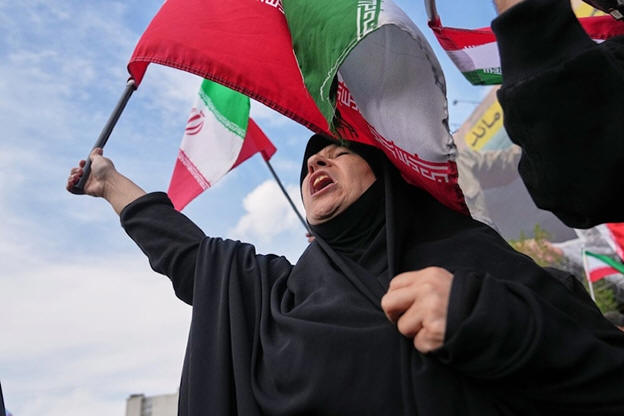 |
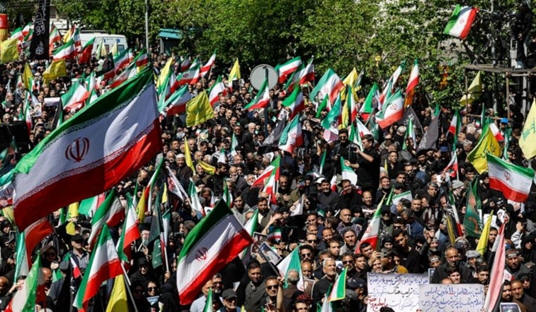
| The Iranian people marked the 40th day since the martyrdom of Iran's Supreme Leader, Sayyid Ali Khamenei, an event commemorated with widespread popular ceremonies across the country, April 9, 2026. | Large demonstrations swept across Iranian cities, following the announcement of a ceasefire between Iran and the United States, after Washington accepted Tehran's conditions for a ceasefire, April 8, 2026 mayadeen |
 |
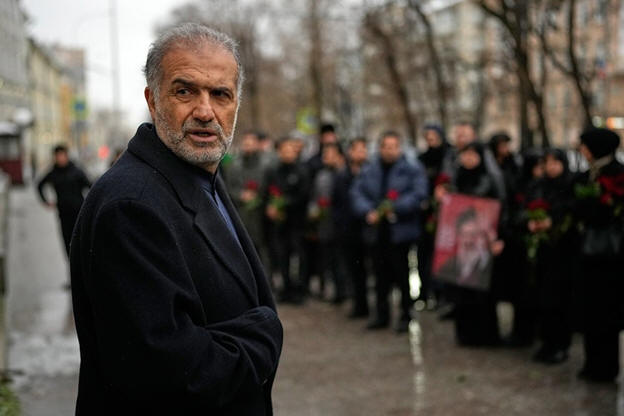 |
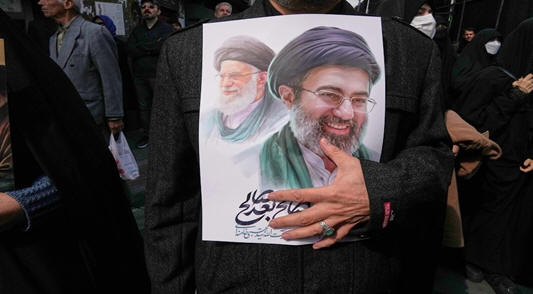
| Sayyid Mojtaba Khamenei praises 'Hizbullah’s loyalty in a message to Shaikh Na'eem Qasim, reaffirming Iran’s continued support for the Lebanese people's resistance to the Israeli occupation, April 1, 2026. | Iran is prepared to engage in negotiations with the US, provided that they produce tangible outcomes and deliver lasting peace, said Iranian Ambassador to Russia, Kazem Jalali, April 9, 2026 mayadeen |
| Two-Week Iran-US Ceasefire, with Peace Talks in Pakistan, Iranians Commemorate Martyrdom of Supreme Leader Ali Khamenei, Staunch Iranian Support to Lebanon Against Israeli Aggression, April 9, 2026 | |
***
Iran secures 2-week ceasefire with US on its terms, to include Lebanon
Al-Mayadeen, April 8, 2026
Iran-US ceasefire reached under regional mediation; "Israel" suspends attacks, and key Iranian security and economic demands are highlighted.
Iran has achieved a significant diplomatic victory after reaching a two-week ceasefire with the United States, following intense negotiations and regional mediation, Iranian officials announced Wednesday.
Under the arrangement, Iran’s armed forces have agreed to suspend defensive operations if the US and "Israel" halt their attacks, while safe passage through the strategically vital Strait of Hormuz will be permitted for the next two weeks under coordination with Iran’s military and technical restrictions.
In a statement on behalf of the Iranian Supreme National Council, Iranian Foreign Minister Abbas Araghchi stated that, “In response to the brotherly request of PM Sharif in his tweet, and considering the request by the United States for negotiations based on its 15‑point proposal as well as the US announcement by POTUS about acceptance of the general framework of Iran’s 10‑point proposal as a basis for talks, I hereby declare on behalf of Iran's Supreme National Security Council: If attacks on Iran are halted, our Powerful Armed Forces will cease their defensive operations.”
Additionally, Araghchi expressed gratitude to Pakistani Prime Minister Shehbaz Sharif and Chief of Army Staff Field Marshal Asim Munir for their “tireless efforts to end the war in the region,” noting that the ceasefire reflects the sacrifices of Iranian forces and the enduring support of the population since the early days of the conflict.
Iran's 10 terms
As part of the ceasefire agreement with the United States, Iran has outlined a detailed set of demands aimed at ensuring its national security, economic sovereignty, and regional influence.
Central to the list is Iran’s insistence on a commitment to non-aggression from the United States and its allies, seeking guarantees that the temporary pause in fighting will not be exploited for renewed military action. Equally significant is Tehran’s demand to maintain control over the Strait of Hormuz, a critical maritime chokepoint through which a substantial portion of the world’s oil supply passes. By retaining oversight of this passage, Iran reinforces its strategic leverage in global energy markets.
Iran also emphasizes the recognition of its right to uranium enrichment, a long-standing point of contention in international nuclear negotiations. The inclusion of sanctions relief, both primary and secondary, underscores the country’s focus on economic stability and the restoration of international trade and financial access.
At the same time, Iran calls for the termination of all UN Security Council and Board of Governors resolutions that it views as restrictive or punitive, highlighting a desire to reset its international standing on nuclear and security issues.
Beyond these political and economic objectives, Tehran is seeking paid compensation for damages suffered and a complete withdrawal of US forces from the region, aiming to reduce foreign military presence that Iran considers a threat. Finally, the list calls for the end of military operations on all fronts, including Lebanon, signaling Iran’s concern for its allied positions and broader regional influence.
Iran’s 10-Point Ceasefire Demands:
1. Commitment to non-aggression
2. Continuation of Iran’s control over the Strait of Hormuz
3. Recognition of Iran's right to uranium enrichment
4. Lifting all primary sanctions
5. Lifting all secondary sanctions
6. Termination of all United Nations Security Council resolutions
7. Termination of all Board of Governors resolutions
8. Paid compensation for Iran
9. Withdrawal of US forces from the region
10. Ending the war on all fronts, including Lebanon
'Israel' joins the ceasefire in Iran
Meanwhile, a senior White House official told CNN that "Israel" has agreed to join the temporary ceasefire and suspend its bombing campaigns while negotiations continue.
The ceasefire was announced by US President Donald Trump just 90 minutes before a self‑imposed deadline for Iran to reopen the Strait of Hormuz or face escalated US attacks on civilian infrastructure, the official said.
The White House official confirmed that "Israel" has also joined the ceasefire, agreeing to temporarily suspend its bombings while negotiations continue.
Iran secures 2-week ceasefire with US on its terms, to include Lebanon | Al-Mayadeen English
***
Iran, IRGC commemorate 40th day since Sayyed Khamenei's assassination
Al-Mayadeen, April 9, 2026
Iran marks 40 days since Ali Khamenei’s martyrdom; the IRGC pledges to continue his path amid ongoing Israeli attacks.
The Iranian people marked the 40th day since the martyrdom of Iran's Supreme Leader, Sayyid Ali Khamenei, an event commemorated with widespread popular ceremonies across the country.
In the context of Thursday's events, a statement issued by the Islamic Revolution Guard Corps (IRGC), the force hailed Sayyed Khamenei’s sacrifice as a turning point in the region.
IRGC highlights Sayyed Khamenei’s legacy
“The end of the dark era of arrogance in the region came by the blessing of the blood of the martyr leader,” the IRGC said, emphasizing that his martyrdom inspired the Iranian people’s resurgence.
The statement highlighted the role of national resistance, unity, and the Iranian armed forces in repelling aggressors, underlining that these achievements are part of the blessings of Sayyed Khamenei’s martyrdom.
Regarding the late leader’s philosophy, the IRGC described it as “a comprehensive system for leadership and governance that we will emulate,” reaffirming loyalty to the newly elected leader of the Islamic Revolution and Republic, Sayyed Mojtaba Khamenei, and pledging to continue the path of Ali Khamenei “with strength and determination”.
Sayyed Ali Khamenei was officially declared a martyr on March 1, 2026, following a US-Israeli aggression on Iran against his home on February 28. Subsequently, Iran’s Assembly of Experts elected Sayyed Mojtaba Khamenei as the third leader of the Islamic Revolution and Republic, citing thorough deliberations under Article 108 of the Iranian constitution and a “duty before God”.
The commemoration comes over 40 days after the start of the US-Israeli war on Iran, and a two-week ceasefire period that was agreed to on Wednesday. However, the ceasefire terms have been breached by the United States and the Israeli regime, after the US endorsed Israeli bombing of Lebanon, saying that a ceasefire in the country was never part of the agreement.
However, at an earlier time, Pakistani Prime Minister Shehbaz Sharif mediated and announced the ceasefire, saying that Iran and the United States, and their allies, had agreed to an immediate ceasefire covering all fronts, including Lebanon.
Iran, IRGC commemorate 40th day since Sayyed Khamenei's assassination | Al Mayadeen English
***
Mass rallies, interfaith ceremonies commemorates Sayyed Khamenei
Al-Mayadeen, April 8, 2026
Mass rallies and interfaith ceremonies sweep Iran following a ceasefire with the US, as the nation commemorates the fortieth day since the martyrdom of Iran's Supreme leader, Sayyid Ali Khamenei.
Large demonstrations swept across Iranian cities following the announcement of a ceasefire between Iran and the United States, with citizens taking to the streets to celebrate the victory after Washington accepted Tehran’s conditions for a ceasefire.
Parallel to the celebrations, Iran witnessed widespread commemorations marking the fortieth day since the martyrdom of Sayyid Ali Khamenei, who was killed on the first day of the US-Israeli aggression against the country.
In Tehran, the Armenian Church hosted a major ceremony attended by officials, cultural and social figures, alongside notable participation from Christian, Jewish, and Muslim communities. Prayers and masses were held to commemorate the martyred Iranian Leader, reflecting a scene of interfaith solidarity.
Similar ceremonies were reported in churches across multiple provinces, coinciding with Easter celebrations, underscoring what correspondents described as a manifestation of national unity.
“One Iran”: unity across religions
Christian communities across Iran actively participated in commemorating Sayyed Khamenei's martyrdom, following 40 days after his assassination by US-Israeli forces. Participants held prayers and religious services in his honor.
The participation of Armenian Christians was particularly highlighted, given martyr Sayyed Khamenei’s longstanding emphasis on the importance of Iran’s Christian community and his close ties with Armenian religious figures.
Celebrations across provinces
At the same time, celebratory demonstrations and convoys were reported in several regions, including Ilam province, marking the ceasefire and what participants described as Iran’s victory.
Iranian President Masoud Pezeshkian stated in a post on X that the ceasefire was achieved after the imposition of the general principles proposed by Iran, describing it as “the fruit of the blood of our martyred leader Sayyed Ali Khamenei”, the armed forces, and the Iranian people.
He added that the coming phase would witness continued Iranian unity, stressing that Iranians would remain together “in diplomacy, in defense, in the street, and in service.”
Mass rallies, interfaith ceremonies commemorates Sayyed Khamenei | Al-Mayadeen English
***
Sayyid Mojtaba Khamenei to 'Hizbullah: Resistance will prevail
Al-Mayadeen, 1 Apr 2026
Sayyid Mojtaba Khamenei praises 'Hizbullah’s loyalty in a message to Shaikh Na'eem Qasim, reaffirming Iran’s continued support for the Lebanese people's resistance to the Israeli occupation of their lands in the South..
Iran’s Leader, Sayyid Mojtaba Khamenei, has sent a formal letter to 'Hizbullah Secretary-General Shaikh Na'eem Qasim, expressing appreciation for condolences following the martyrdom of Sayyid Ali Khamenei.
In the letter, Sayyid Khamenei thanked Sheikh Qassem for his sympathy and highlighted the “feelings of love and loyalty” expressed by Hezbollah fighters, noting that these sentiments were conveyed “on their own behalf,” reflecting deep commitment to the resistance movement.
Sayyid Khamenei emphasized that steadfastness in the face of “the fiercest enemies of the Islamic Ummah, namely the United States and the Zionist entity,” was among the defining traits of the late leader. He added that the continuation of the resistance path over the years, alongside major sacrifices, demonstrated “the authenticity of this approach.”
The Iranian leader pointed to figures such as Qasim Sulaymani, describing them as “precious martyrs”, alongside other senior commanders in Iran’s military institutions whose martyrdom underscored the credibility of the resistance doctrine.
“The history of the Islamic resistance is filled with struggle, courage, and sacrifice,” Sayyid Khamenei wrote, adding that its leaders “gave their lives in defense of the nation without fear of any threat.”
He also lauded 'Hizbullah figures, including Shaikh Raghib 'Harb, Sayyid 'Abbas El-Mousawi, Sayyid Hasan Nasrullah, and Sayyid Hashim Safiyoddeen, describing them as “true models of this steadfast path.”
Addressing Shaikh Qasim directly, Sayyid Khamenei said he is leading 'Hizbullah at a “critical juncture in the history of the resistance,” expressing confidence in his “wisdom, intelligence, and courage to thwart and crush the schemes of the Zionist enemy, and restore pride and prosperity to the Lebanese people.”
He concluded by reaffirming that Iran would continue its long-standing policy of supporting resistance movements “against the Zionist and American enemy,” wishing “success for all the mujahideen brothers.”
Below is the full text published by 'Hizbullah:
Sayyid Mojtaba 'Husaini Khamenei sent a message to Hezbollah Secretary-General Sheikh Na'eem Qasim, in which he expressed his appreciation for the condolences and sympathy offered on the occasion of the martyrdom of the great leader of the Islamic Revolution. He also drew attention to the feelings of love and loyalty expressed by the Lebanese 'Hizbullah fighters on their own behalf.
In his message, Sayyid Khamenei pointed out that steadfastness and resilience in the face of the fiercest enemies of the Islamic nation, namely the United States and the Zionist entity, were among the most prominent characteristics of the martyred imam leader.
He also noted the continuation of the path of resistance throughout the years of this leader’s leadership, along with the offering of dear martyrs such as Hajj Qasim Sulaymani and other senior commanders in the Islamic Revolution Guard Corps and the army, as evidence of the credibility of this approach.
He affirmed that the history of the Islamic resistance is filled with struggle, courage, and sacrifices, as resistance leaders gave their lives in defense of the ummah without fear of any threat. He added that 'Hizbullah leaders, from the martyred Sheikh Raghib 'Harb and Sayyid 'AbbasEl-Mousawi, to Sayyid 'Hasan Nasrullah and Sayyid Hashim Safiyuddeen, were true models of this steadfast path.
Addressing the Hezbollah Secretary-General, Sayyid Khamenei said that he is leading the movement today at this critical juncture in the history of the resistance, affirming his confidence in his experience, intelligence, and courage to thwart and crush the schemes of the Zionist enemy, and to restore pride and prosperity to the Lebanese people.
He concluded his message by emphasizing that the firm policy of the Islamic Republic of Iran, following the path of the late imam and the martyred leader, continues to support the resistance against the Zionist and American enemy, while wishing success to all the mujahideen brothers.
In his first letter, Sayyid Mojtaba Khamenei vows continued retaliation
In his first public message after assuming leadership, Sayyid Mojtaba Khamenei said his country would not retreat from confronting those responsible for the martyrdom of Iranian citizens and leaders.
On March 8, Iran’s Assembly of Experts announced the election of Sayyed Mojtaba Hosseini Khamenei as the third leader of the Islamic Republic, following the martyrdom of Sayyid Ali Khamenei.
In a statement issued to the Iranian people, the council extended condolences over the martyrdom of Sayyid Ali Khamenei, as well as other victims of the ongoing war, including commanders of the armed forces and students from the Shajareh Tayyebeh school in the southern city of Minab. The statement also condemned the “brutal aggression carried out by the criminal United States and the malicious Zionist regime.”
The council said it moved swiftly to ensure continuity of leadership despite wartime conditions and attacks targeting the institution itself.
In his speech, Sayyid Mojtaba praised the Resistance, thanking allied movements and governments across the region for supporting Iran during the war.
“We consider the countries of the Resistance front to be among the friendliest to Iran,” he affirmed, praising Ansar Allah, Hezbollah, and the Iraqi Resistance for their continued support for Gaza and Iran.
They are inseparable from the Islamic Republic of Iran, he said, hailing their efforts and stressing that continued cooperation cuts the enemy's lifeline shorter.
Following his election, Resistance factions and groups across the region hailed Sayyid Mojtaba Khamenei and pledged support for Iran amid the ongoing aggression. Many welcomed Sayyid Khamenei's election, describing him as an "extension of the Islamic Revolution’s path."
Sayyid Mojtaba Khamenei to Hezbollah: resistance will prevail | Al-Mayadeen English
***
Jalali: Iran ready for talks if they yield tangible results
Al-Mayadeen, April 9, 2026
Iran's ambassador to Russia tells Al Mayadeen that the international community should closely observe how Washington conducts itself at the table.
Tehran is prepared to engage in negotiations with the United States, provided that they produce tangible outcomes and deliver lasting peace to the region, Iran's Ambassador to Russia, Kazem Jalali, stated on Thursday.
In an interview for Al Mayadeen, Jalali said, "If the Americans approach negotiations in good faith, they can lead to results," adding that the international community should closely observe how Washington conducts itself at the table.
He noted that trust between Iran and the United States remains insufficient, pointing to Washington's track record of failing to honor its commitments as the central obstacle. Jalali reaffirmed that Iran does not seek war, noting that "the Zionists and the Americans carried out the aggression against Iran; Iran was the victim in this war."
He added that Iran had come close to resolving outstanding issues in previous rounds of negotiations and reiterated that Tehran is not pursuing nuclear weapons.
US failed to achieve objectives
"Trump's statements contain many contradictions," the Iranian envoy said, describing the current confrontation as "a war of wills" and suggesting that public demonstrations are the clearest indicator of where the balance of resolve lies. "The Americans initially said they would overthrow the system, but they failed, and the situation turned upside down," Jalali said, adding that Washington and the West may have wrongly concluded that Iran is weak.
On Iran's military posture, Jalali said the country had achieved military successes despite the loss of several senior commanders, asserting that its institutions continue to function normally.
"They claimed to have destroyed our navy, yet our missiles remain operational despite all these allegations," he said, stressing that engaging in conflicts is not among Iran's priorities and that it seeks peace both regionally and globally.
Negotiators, date of talks yet to be confirmed
On the question of who will represent Iran in the talks set to be held in Pakistan, Jalali said the identity of the delegation head will be officially announced in due course. Sources cited by Iran's ISNA had reported that Parliament Speaker Mohammad Bagher Ghalibaf would lead the Iranian negotiating team, opposite a US delegation headed by Vice President JD Vance, but an official confirmation from Tehran is still pending.
Pakistani Prime Minister Shehbaz Sharif, who brokered the two-week ceasefire between Iran and the United States, stated on Wednesday that talks would begin on Friday in Islamabad. However, a post by Iran's ambassador to Pakistan, Reza Amiri-Moghaddam, saying that an Iranian delegation would arrive in Islamabad on Thursday night was subsequently deleted. When asked about the removal, an embassy official told AFP, "Timing, we were not supposed to send it."
No ceasefire without Lebanon
The talks are taking place against the backdrop of an already fragile ceasefire, with Israeli attacks on Lebanon emerging as a potential dealbreaker for Tehran.
A ceasefire that encompasses Lebanon, alongside the rest of the Axis of Resistance, is explicitly listed as point 1 of Iran's ten-point proposal covering all, leading both Ghalibaf and President Pezeshkian to issue warnings Thursday that Israeli attacks on Lebanon are complicating the path to negotiations.
Pezeshkian stressed that continued Israeli escalation would render the ongoing negotiations meaningless, reaffirming that Iran will not abandon the Lebanese people.
Meanwhile, Iranian Deputy Foreign Minister Saeed Khatibzadeh announced that Iran's delegation will head to Islamabad on the condition that "Israel" halts its aggression against Lebanon. He added that any peace in the region must include Lebanon, and that the coming hours will be decisive.
Strait of Hormuz, Russia's role
Jalali addressed the legal status of the Strait of Hormuz, stressing that its governance is determined by its littoral states, Iran and Oman, and that Iran's recent actions were aimed at upholding that legal framework rather than closing the waterway outright. "Iran has never sought to close the strait," he maintained.
On Iran-Russia relations, Jalali noted that Moscow condemned the aggression against Iran from the very first day, with direct communication between Presidents Vladimir Putin and Masoud Pezeshkian beginning early in the war.
Jalali: Iran ready for talks if they yield tangible results - Excl. | Al Mayadeen English
***
Fair Use Notice
This site contains copyrighted material the
use of which has not always been specifically authorized by the copyright
owner. We are making such material available in our efforts to advance
understanding of environmental, political, human rights, economic,
democracy, scientific, and social justice issues, etc. We believe this
constitutes a 'fair use' of any such copyrighted material as provided for
in section 107 of the US Copyright Law. In accordance with Title 17 U.S.C.
Section 107, the material on this site is
distributed without profit to those
who have expressed a prior interest in receiving the included information
for research and educational purposes. For more information go to: http://www.law.cornell.edu/uscode/17/107.shtml.
If you wish to use copyrighted material from this site for purposes of
your own that go beyond 'fair use', you must obtain permission from the
copyright owner./font>
|
||||||||||||||||