www.aljazeerah.info
2026 News
Archives
Mission & Name
Conflict Terminology
Editorials
Gaza Holocaust
Gulf War
Isdood
Islam
News
News Photos
Opinion Editorials
US Foreign Policy (Dr. El-Najjar's Articles)
www.aljazeerah.info
|
Editorial Note: The following news reports are summaries from original sources. They may also include corrections of Arabic names and political terminology. Comments are in parentheses. |
***
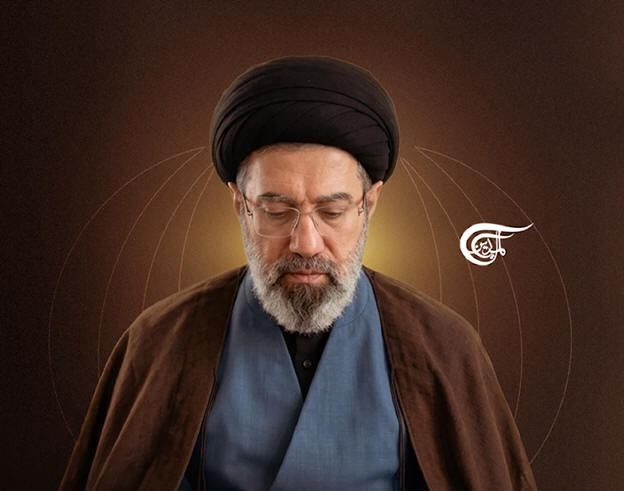
Iran's Assembly of Experts elected Sayyid Mojtaba Khamenei, as the new Leader of the Islamic Republic, marking a historic leadership transition, after the assassination of his father
March 9, 2026
***
 |
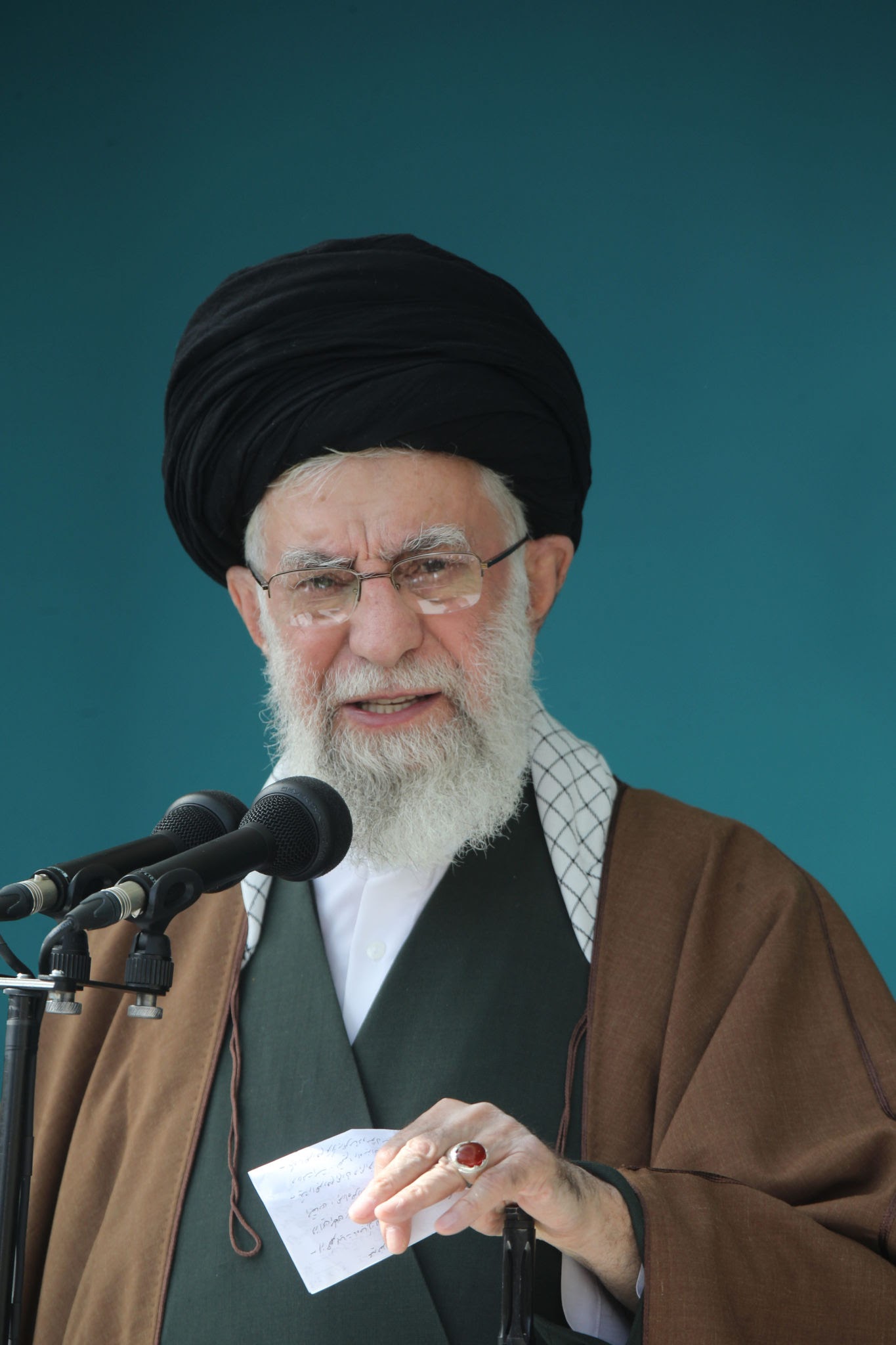 |
| Iran's Assembly of Experts elected Sayyid Mojtaba Khamenei, as the new Leader of the Islamic Republic, marking a historic leadership transition, after the assassination of his father, March 8, 2026 | Iranian supreme leader, Sayyid Ali Khamenei, was assassinated in joint US-Israeli airstrikes, in what Israeli officials characterize as a decapitation strike, intended to paralyze Iranian decision-making, February 28, 2026 handout |
***
Who Is Sayyid Mojtaba Khamenei, Iran's New Leader?
Al-Mayadeen, March 9, 2026
Iran’s Assembly of Experts elects Sayyid Mojtaba Khamenei as the new Leader of the Islamic Republic, marking a historic leadership transition. Here's all you need to know about Iran's new leader.
In a pivotal moment for the Islamic Republic, Iran's Assembly of Experts has elected Sayyid Mojtaba Khamenei as the country's new Leader, succeeding his father martyr Sayyid Ali Khamenei, who was killed in the initial strikes of the US-Israeli aggression on Iran on February 28.
The decision marks a historic transition for Iran's leadership at a moment of unprecedented global uncertainty, resulting from the American-Israeli decision to launch an existential war on the Islamic Republic of Iran.
The 56-year-old Khamenei was born in 1969 in the holy city of Mashhad and has spent his entire life immersed in revolutionary politics and religious scholarship. Unlike many political successors who come to prominence through formal government positions, Mojtaba Khamenei ascended through informal channels, building an extensive network of relationships across Iran's security apparatus, religious institutions, and political circles.
A life shaped by revolution
Mojtaba's childhood unfolded during the most formative period of the Islamic Republic. Born just months before the 1979 Islamic Revolution that transformed Iran, he grew up in a deeply religious and political household at the heart of revolutionary institutions. His early exposure to state-building, decision-making processes, and governance gave him an insider's understanding of Iran's political machinery that few contemporaries possess.
In his formative years, he chose to pursue advanced religious education at Qom's seminaries, the premier theological center for Shia Islam. There, he devoted himself to studying Islamic jurisprudence and the principles of Islamic law, reaching the highest stages of seminary education, which precedes the rank of marja (source of emulation). This scholarly foundation distinguished him from many Iranian political figures and provided him with the religious credentials necessary for the leadership of the Islamic Republic.
The crucible of war
The trajectory of Sayyid Mojtaba's political influence was shaped significantly by the Iran-Iraq War that dominated the 1980s. During these formative years, he became affiliated with the Islamic Revolution Guard Corps (IRGC), serving in military units alongside fighters who would later become prominent commanders in Iran's security establishment. These wartime bonds have proven decisive, as he now commands the full trust of the security and military leadership to guide Iran through the current war on the country.
The shared experience of the "Sacred Defense" against Iraq created a cohort of leaders bound by mutual respect, shared ideology, and battle scars.
Power without portfolio
What distinguished Sayyid Mojtaba's rise was his accumulation of influence without holding prominent formal positions. For decades, he remained largely out of the public eye, yet his name became increasingly central to analyses of Iran's power dynamics. He reportedly played key roles in coordinating policy initiatives, building communication channels between various state institutions, and serving as a liaison between the office of the Leader and other branches of government.
His influence became particularly visible during the political upheavals of 2009, when Iran faced its most serious internal crisis. From that moment forward, his name was consistently mentioned in discussions regarding power balances and the future direction of the Islamic Republic.
Beyond his political networks, Sayyid Mojtaba developed genuine religious credentials. He spent more than 17 years teaching advanced seminary courses in Islamic jurisprudence and principles of Islamic law. His scholarly contributions were recognized by prominent clerics, and he gained respect within theological circles for his rigorous approach to Islamic sciences. This dual foundation, both religious scholarship and political-military connections, positioned him uniquely for the leadership role.
A challenge to US imperialism
The Assembly of Experts' decision to elect Sayyed Mojtaba represents continuity and significant change, as well as a direct challenge to US President Donald Trump.
The Iranian system has traditionally resisted hereditary succession, and some observers noted that the martyr Sayyid Ali Khamenei had reportedly expressed reservations about his son assuming the position. However, the current context of succession is different.
Sayyid Ali Khamenei was assassinated in joint US-Israeli airstrikes, in what Israeli officials characterize as a "decapitation strike" intended to paralyze Iranian decision-making and foster a leadership transition more favorable to Western interests. Meanwhile, Trump has intervened in the succession debate, publicly dismissing the late leader’s son, Mojtaba Khamenei, as an "unacceptable lightweight". Trump signaled a desire for a hand-picked successor who would align with US regional goals, warning that a continuation of anti-West policies would lead to further aggression.
In this light, the succession transcends a mere transfer of familial power. It has emerged as a unified defiance by Iran’s clerical establishment, military apparatus, and political factions against a US attempt to subvert national sovereignty and impose external will on the Iranian people.
In accepting his election, Sayyed Mojtaba pledges to continue the revolutionary path established by Ayatollah Ruhollah Khomeini and maintained through his father's 34-year tenure. Officials have emphasized that the transition represents continuity with established principles, as well as a contemporary touch to move the Islamic Republic forward.
Broad support across political and regional lines
The election has garnered support from Iran's political establishment and allied movements across the region. President Masoud Pezeshkian said that the council's selection will mark a new stage for self-sufficiency and prosperity for the Iranian people.
First Vice President Reza Aref declared his backing for Sayyed Mojtaba, testifying that he is "a sincere and capable person for leadership, knowledgeable about the issues and affairs of the system and the state."
Reformist-intellectual Atta'allah Mohajerani also announced his support for the selection, signaling that backing for the transition extends across Iran's traditional political spectrum. The Iranian judiciary affirmed the legitimacy of the process, with the head of the judicial branch noting that the Assembly of Experts selected Sayyed Khamenei by an "overwhelming majority" and praising the assembly's demonstration of its "decisive role in preserving the country's stability and cohesion".
Iran's armed forces, through the Khatam al-Anbiya command headquarters, declared their readiness for "complete obedience" to their new leader and renewed their allegiance to the principles of the Islamic Revolution's founding figures.
Regional allies voice confidence
The election has also received backing from Iran's regional allies. Sanaa's Supreme Political Council Chairman Mahdi al-Mashat characterized the selection as "an indicator of Iran's strength and cohesion", while the Yemeni Ansar Allah movement's political office expressed confidence that Iran will "advance toward achieving a great victory that shapes the characteristics of dignity and honor for the nation in confronting global arrogance."
Iraq's Kata'ib Hezbollah, speaking through Secretary General Abu Hussein al-Hamidawi, called the appointment evidence of "the deep insight and foresight" of the Assembly of Experts in selecting a leader capable of carrying the banner of resistance movements amid the "destabilizing challenges" facing the region.
Resilience amid adversity
Supreme National Security Council of Iran (SNSC) Secretary Ali Larijani underscored the significance of the transition, noting that despite the enemies' calculations that the assassination would leave the country at an impasse, the election of Sayyid Mojtaba Khamenei demonstrated Iran's institutional resilience. Larijani predicted that Sayyed Khamenei's presence "will be a source of prosperity and blessing for the future of the Islamic Revolution."
International observers have noted the election's broader significance. The New York Times and the Financial Times suggested the choice signals Iran's determination to continue on its course regardless of pressure from "Israel" and the United States, demonstrating continuity during crisis.
As Iran enters this new chapter under Sayyid Mojtaba Khamenei's leadership, the breadth of institutional support and regional backing suggests the transition, while unprecedented in circumstances, may provide the new leader with considerable political capital to navigate the extraordinary challenges ahead.
His decisions in the coming months on military strategy, the nuclear file, negotiations, and the direction of the revolution will shape not only Iran's future but regional stability more broadly.
Who is Sayyed Mojtaba Khamenei, Iran's next leader? | Al Mayadeen English
***
Pezeshkian: Sayyid Khamenei's assassination is an open war on region
Al-Mayadeen, March 9, 2026
Tehran condemns the killing as a violation of sovereignty and international law, warning that continued impunity could destabilize the region and undermine diplomatic efforts.
Iranian President Masoud Pezeshkian said the assassination of Iran's Leader Sayyid Ali Khamenei constitutes “an open war against the peoples of the region,” vowing that Tehran will respond to the grave act of aggression.
In a statement mourning Sayyid Khamenei, Pezeshkian said that “the assassination of the Leader of the Revolution constitutes an open war against the peoples of the region,” framing the assassination as an aggression not only on Iran but on regional stability as a whole.
He added that “Imam Khamenei’s steadfastness and resistance to injustice have immortalized his name in the pages of history,” emphasizing that Iran remains resolute in its course.
“The Islamic Republic of Iran considers it its legitimate duty and right to avenge the perpetrators and masterminds of this historic crime,” Pezeshkian stressed.
Foreign Ministry: Assassination marks shift toward ‘rule of bullying’
In a separate statement, Iran’s Foreign Ministry described the assassination of Sayyid Khamenei by the United States and "Israel" as “a cowardly terrorist act” and “a military aggression against Iran’s sovereignty and territorial integrity,” calling it a clear violation of international law.
The Ministry warned that failure to hold Washington and "Israel" accountable would risk normalizing such actions, leading to the prevalence of injustice and aggression beyond the region. It further cautioned that the assassination represents “a frightening shift toward a global order governed by bullying and arrogance.”
According to the statement, the renewed military aggression amid ongoing negotiations amounts to “a betrayal of diplomacy.” The Ministry accused those behind the assassination of being “among the most corrupt and malicious leaders in the world, with records filled with moral corruption and heinous crimes.”
Concluding its remarks, the Foreign Ministry said that “the banner of justice and the pursuit of freedom will remain raised,” asserting that the “cowardly assassination of Iran’s leader will transform him into an eternal and inspiring legend in history.”
Iran erupts in mass mourning after Sayyid Khamenei's martyrdom
Millions of citizens across various Iranian provinces, including the capital Tehran, took to the streets on Sunday in massive demonstrations mourning the martyrdom of Sayyid Ali Khamenei, and denouncing the heinous US-Israeli aggression that targeted him and other key figures of the Islamic Republic.
In Isfahan, vast crowds gathered in spontaneous marches marked by grief and defiance, while in Ahvaz, demonstrators voiced firm rejection of the assault and reaffirmed their unity in the face of the attack on Iran’s sovereignty and dignity.
Al Mayadeen’s correspondent reported that despite continued US and Israeli bombardment, people remained in the streets chanting in support of Sayyed Khamenei and pledging loyalty to the path of resistance. Participants said the airstrikes, which have struck residential neighborhoods, civilian infrastructure, and public facilities, were intended to intimidate the population, but instead strengthened public resolve.
The demonstrations come amid a rapidly rising humanitarian toll. The Public Prosecutor’s Office in Hormozgan Province confirmed that the death toll from the US-Israeli strike on the Girls’ Primary School in Minab has climbed to 148 martyrs, with 95 wounded, most of them schoolchildren.
In another attack, 20 female volleyball players were killed when a sports hall in Lamerd, Fars Province, was struck, according to provincial officials. The Iranian Red Crescent Society reported that nationwide casualties have reached 201 martyrs and 747 injured since the onset of the aggression, underscoring the scale of civilian losses.
Treacherous attack triggers retaliation
The United States and “Israel” launched their assault on February 28 while nuclear talks were ongoing. Israeli Prime Minister Benjamin Netanyahu claimed the operation was aimed at eliminating what he termed an “existential threat”, stating that the “joint US–Israeli operation against Iran aims to reshape the region’s strategic landscape.” The strikes hit several major cities, including Tehran, Qom, Tabriz, and Khorramshahr, prompting widespread airspace closures across Iran and the region.
Early Sunday, Iranian state television confirmed that Sayyid Ali Khamenei was martyred while carrying out his duties. Officials said his martyrdom refuted claims that he had been in hiding, asserting that he remained present among his people during the aggression. A 40-day national mourning period has been declared, with extended public holidays in his honor.
In response to the unprovoked attack, the Iranian Armed Forces announced retaliatory measures, launching waves of ballistic missiles and drones toward “Israel,” with impacts reported in Tel Aviv and other areas across the occupied Palestinian territories. Missile and drone strikes were also reported against US military bases and assets hosted in several Gulf states.
Iranian authorities and the Islamic Revolution Guard Corps vowed that the path of resistance will continue and that accountability will be pursued against those responsible for grave crimes against the Iranian nation. Meanwhile, protests and solidarity demonstrations have erupted across Pakistan, Iraq, Bahrain, and parts of Kashmir, signaling the widening regional resonance of the crisis.
Pezeshkian: Sayyed Khamenei's assassination is an open war on region | Al Mayadeen English
***
War on Iran disrupts global trade routes, shipping, energy markets: WP
Al-Mayadeen, March 9, 2026
An analysis by The Washington Post warns that the war involving Iran is disrupting global trade routes, driving up shipping and energy costs while hitting Asian and European economies hardest.
An analysis published by The Washington Post's David J. Lynch on Monday examined the widening economic consequences of the ongoing US-Israeli war on Iran, warning that the war is disrupting major global trade routes and sending shockwaves through supply chains, energy markets, and financial systems.
According to the report, missile and drone strikes launched by Iran in response to the assault have severely disrupted transportation corridors linking Asia and Europe. Maritime traffic through the Gulf and aviation networks across the region have both been affected, forcing companies to reroute shipments and absorb rising logistics costs.
The analysis noted that the temporary closure of several airports in the region, including major hubs in the Gulf, has removed a significant share of global air cargo capacity. As a result, shipments of electronics, pharmaceuticals, precious metals, and other high-value goods that typically travel by air have been delayed or rerouted.
Shipping costs surge globally
The disruptions have rapidly pushed transportation prices higher. Ryan Petersen, chief executive of the logistics firm Flexport, said the cost of shipping goods between Asia and Europe has climbed sharply since the beginning of the hostilities.
“The cost of shipping goods by air from Asia to Europe is up 45 percent since the war began,” Petersen said.
Economists cited in the analysis argued that the economic shock triggered by the war on Iran is affecting Europe and Asia more immediately than the United States, largely because these regions rely heavily on energy imports from the Gulf and on the trade routes that pass through it.
Maurice Obstfeld, former chief economist at the International Monetary Fund, explained that these structural dependencies expose those economies to stronger spillover effects.
“Europe and Asia are heavily dependent on energy imports, so that alone makes them more vulnerable to negative macroeconomic spillovers from the Iran war,” Obstfeld said. “Being closer geographically to the hostilities also makes Europe and Asia more vulnerable to shock waves from the war.”
Hormuz disruptions shake global trade
At the center of the disruption is the Strait of Hormuz, one of the world’s most critical maritime chokepoints. Roughly 20 percent of global oil supplies normally pass through the narrow waterway connecting the Gulf to international markets, making any instability there immediately consequential for global energy trade.
Since the start of the war on Iran on February 28, shipping activity through the Strait has fallen sharply, with numerous tankers and cargo vessels either stranded or diverted as companies respond to security risks and rising insurance costs.
The decline in maritime traffic is already beginning to ripple through global supply chains. Several major shipping companies have halted new cargo bookings for Gulf destinations or redirected vessels to other ports, leaving businesses scrambling to adjust their delivery schedules and manage mounting storage costs.
Air transport networks are facing even greater pressure. With multiple countries closing their airspace amid missile and drone exchanges, freight carriers have been forced to take longer flight paths that require additional fuel and reduce available cargo capacity.
Oscar de Bok, chief executive of DHL Global Forwarding, said the backlog in cargo deliveries could take weeks to clear even if flights resume quickly.
“For each week that air shipments are suspended, cargo carriers will need at least a week and a half to catch up,” he said.
War Sparks Global Inflation Risks
Energy markets have also been shaken by the war. The disruption of shipments through the Gulf has contributed to rising oil prices and fears of tighter supplies, while gas markets have faced additional uncertainty after production interruptions in the region.
The economic consequences are already spreading to other sectors. Rising fuel and fertilizer prices could soon increase costs for farmers, while financial markets in several Asian countries have experienced volatility amid fears of prolonged instability.
Josh Linville, vice president at the financial services firm StoneX, said the magnitude of the disruption is unprecedented.
“I don’t even know how to place numbers on it,” Linville said. “This is an event we’ve never seen before.”
Analysts warn that if the war on Iran continues, the combined effects of disrupted shipping routes, higher energy prices, and strained logistics networks could weigh heavily on global economic growth, echoing the supply-chain shocks experienced during the COVID-19 pandemic.
War on Iran disrupts global trade routes, shipping, energy markets: WP | Al Mayadeen English
***
Fair Use Notice
This site contains copyrighted material the
use of which has not always been specifically authorized by the copyright
owner. We are making such material available in our efforts to advance
understanding of environmental, political, human rights, economic,
democracy, scientific, and social justice issues, etc. We believe this
constitutes a 'fair use' of any such copyrighted material as provided for
in section 107 of the US Copyright Law. In accordance with Title 17 U.S.C.
Section 107, the material on this site is
distributed without profit to those
who have expressed a prior interest in receiving the included information
for research and educational purposes. For more information go to: http://www.law.cornell.edu/uscode/17/107.shtml.
If you wish to use copyrighted material from this site for purposes of
your own that go beyond 'fair use', you must obtain permission from the
copyright owner./font>
|
||||||||||||||||